Image of KTM new model for the next three years uncovered after an American dealers from taking pictures with camera phones in the middle of the presentation.
The photographs showed the model from 2012 until 2014, of which R 690 Enduro and motocross latest for the 2012 model Duke 350, Adventure Super Duke R 1090 and R 1290 as a 2013 model and Moto3 Enduro 350 and 350 for model 2014.
Moto3 350 which is designed fullfairing touted as a modern model that is able to replace older models such as the class 250 cc Suzuki RGV250, Aprilia RS250 and Honda NSR250.
Talk to 350cc engines, KTM seems to want to create your own category after one successful model in the market ie SX-F350.
Adventure R 1090 is prepared to take off the market saturation with a 990cc model, with reinforced Super Duke R 1290 engine which uses all-new V-Twin.
Besides the models mentioned above, there is also an electric motor like a freeride model. KTM wants to try to step far into the future where will be the future, this Austrian manufacturer plans to use off-road engine power.
Showing posts with label Opel. Show all posts
Sunday, August 7, 2011
Sunday, July 31, 2011
BMW X3 xDrive35i
In this 2011 BMW car manufacturer officially launched a new variant was named BMW X3 xDrive35i with six-cylinder inline engine gasoline. This variant is included in the class of SUVs (sports utility vehicle). Meanwhile, another variant is the BMW X3 xDrive20d engined four cylinder in line diesel.
By all appearances, this second generation of the BMW X3 comes with urban-style body design elegant and the view that gagah.BMW X3 xDrive uses a capacity of 3000 cc engine that can generate power to 306 hp at 58.00 rpm and maximum torque of 400 Nm at engine speed between 1200 and 5000 rpm.
While the BMW X3 xDrive20d using turbo four-cylinder diesel engine in line with a capacity of 2,000 cc which is made of aluminum and equipped with common rail direct injection. This machine is capable of spraying power up to 184 hp at 4,000 rpm rotation and a maximum torque of 380 nm in 1750 and 2,750 rpm.
Fresh from the redesign of the exterior and a good stretch, 2011 BMW X3 xDrive35i looks more bold and offer more space for people and goods. Yet deep inside an off-camber switchback mountain, it is to convince you That it's just a tall sports sedan. And no longer hits the contents of your loose to PROVE it.
As before, the standard all-wheel drive ensures That the 2011 BMW X3 xDrive35i earnest climb up the forest road with the first chairlift or the trailhead with ease - even if the most Difficult labor involved only draw Some Sea-Doos or Transporting a distance from Some Banana Republic for road construction.
But the 2011 BMW X3 xDrive35i driving every day cans be annoying, slow throttle response interfere with low-speed character in city driving. The Acura RDX, Audi Q5, Infiniti EX35 and Mercedes-Benz GLK350 all offer a more direct connection to the drivetrain and performance, making it more intuitive.
Given an open road and heads began to roll, but the BMW X3 Gives an exhilarating rush head.
By all appearances, this second generation of the BMW X3 comes with urban-style body design elegant and the view that gagah.BMW X3 xDrive uses a capacity of 3000 cc engine that can generate power to 306 hp at 58.00 rpm and maximum torque of 400 Nm at engine speed between 1200 and 5000 rpm.
While the BMW X3 xDrive20d using turbo four-cylinder diesel engine in line with a capacity of 2,000 cc which is made of aluminum and equipped with common rail direct injection. This machine is capable of spraying power up to 184 hp at 4,000 rpm rotation and a maximum torque of 380 nm in 1750 and 2,750 rpm.
Fresh from the redesign of the exterior and a good stretch, 2011 BMW X3 xDrive35i looks more bold and offer more space for people and goods. Yet deep inside an off-camber switchback mountain, it is to convince you That it's just a tall sports sedan. And no longer hits the contents of your loose to PROVE it.
As before, the standard all-wheel drive ensures That the 2011 BMW X3 xDrive35i earnest climb up the forest road with the first chairlift or the trailhead with ease - even if the most Difficult labor involved only draw Some Sea-Doos or Transporting a distance from Some Banana Republic for road construction.
But the 2011 BMW X3 xDrive35i driving every day cans be annoying, slow throttle response interfere with low-speed character in city driving. The Acura RDX, Audi Q5, Infiniti EX35 and Mercedes-Benz GLK350 all offer a more direct connection to the drivetrain and performance, making it more intuitive.
Given an open road and heads began to roll, but the BMW X3 Gives an exhilarating rush head.
BMW i3 Concept
The BMW i3 Concept is an uncompromisingly sustainable vehicle designed for urban areas. Driven purely by electric power and purpose-built to meet the demands of sustainable and emission-free mobility, it embodies an intelligent form of urban transportation and commuting.
"This automotive concept uses a new architecture which showcases all of its new possibilities and potential. It is the world's first premium electric vehicle." - Andreas Feist, Head of vehicle project BMW i3.
The BMW i3 is a well-resolved all-round concept, with every detail conceived and optimised to fulfil its eventual purpose. Central to its design is the innovative LifeDrive architecture, the key to the BMW i3 Concept's appeal as a light, safe and spacious car. Innovative use of materials and intelligent lightweight design not only enable the i3 Concept to travel long distances on a single charge and provide superb safety in the event of a collision, they also help give the car its excellent driving dynamics. The secure arrangement of the battery in the Drive module gives the vehicle a very low centre of gravity and optimum weight distribution. The electric motor over the rear axle - which generates output of 125 kW/170 hp and impressive torque of 250 Nm (184 lb-ft) from a standstill - and a small turning circle combine to deliver pleasingly crisp driving characteristics and give the driver a very immediate experience of the BMW i3 Concept's lightweight design. The BMW i3 Concept accelerates from 0 to 60 km/h (37 mph) in under four seconds and from rest to 100 km/h (62 mph) in less than eight seconds. The extremely direct sensation at the wheel is expressed in outstanding agility at low speeds and during turning manoeuvres, and makes parking in tricky situations that much easier.
The Life module conjures up a feeling of space inside the car more generous than even the latest conversion vehicles can offer. Select materials lend the open and airy cabin a lounge-like character. The use of renewable raw materials is another defining characteristic of the interior, offering passengers a further means of "experiencing" the sustainability of the vehicle. Elements of the instrument panel and door panelling are visibly made from natural fibres, while the naturally tanned leather of the seats creates a lounge-style ambience. Together, these materials provide an appealing contrast to the clear, "floating" forms of the instrument panel and door elements, and lend the interior a strikingly modern feel. With the drive components located in the Drive module, there is no centre tunnel running through the passenger compartment. This allows the two front and two rear seats to be connected with each other by a continuous seat surface, which allows for ease of entry and exit via the front passenger side of the car and means you can park up close to walls, for example. With four seats, wide-opening opposing "coach" doors, boot capacity of around 200 litres and an additional functional compartment in the front, the BMW i3 Concept is neatly equipped for the demands of everyday use.
However, the electric motor developed by BMW and the optimised lightweight design of the LifeDrive architecture cannot take all the credit for imbuing the car with such efficiency and enabling it to travel such long distances on each charge. Indeed, the ability of the car to recoup energy while on the move and special range-extending functions, such as ECO PRO mode, also add miles to the clock. With ECO PRO mode activated, all the vehicle functions operate with maximum efficiency. For example, the accelerator mapping is tweaked to limit the output summoned when the driver flexes his right foot, and the climate control functions also use as little energy as possible. Added to which, sophisticated aerodynamics and slim, low rolling resistance wheels minimise resistance to the car's forward progress and maximise its range.
Innovative connectivity functions create a seamless connection between the BMW i3 Concept and its customers' lives outside the car. Remote functions accessible via a smartphone enable owners to find their vehicles, flag up nearby charging stations, allow battery charging and preconditioning at the touch of a button and supply information on the current status of the vehicle. Meanwhile, intelligent assistance systems ease the stress on drivers in monotonous city driving situations and allow them to arrive at their destination more safely and in a more relaxed state of mind.
"This automotive concept uses a new architecture which showcases all of its new possibilities and potential. It is the world's first premium electric vehicle." - Andreas Feist, Head of vehicle project BMW i3.
The BMW i3 is a well-resolved all-round concept, with every detail conceived and optimised to fulfil its eventual purpose. Central to its design is the innovative LifeDrive architecture, the key to the BMW i3 Concept's appeal as a light, safe and spacious car. Innovative use of materials and intelligent lightweight design not only enable the i3 Concept to travel long distances on a single charge and provide superb safety in the event of a collision, they also help give the car its excellent driving dynamics. The secure arrangement of the battery in the Drive module gives the vehicle a very low centre of gravity and optimum weight distribution. The electric motor over the rear axle - which generates output of 125 kW/170 hp and impressive torque of 250 Nm (184 lb-ft) from a standstill - and a small turning circle combine to deliver pleasingly crisp driving characteristics and give the driver a very immediate experience of the BMW i3 Concept's lightweight design. The BMW i3 Concept accelerates from 0 to 60 km/h (37 mph) in under four seconds and from rest to 100 km/h (62 mph) in less than eight seconds. The extremely direct sensation at the wheel is expressed in outstanding agility at low speeds and during turning manoeuvres, and makes parking in tricky situations that much easier.
The Life module conjures up a feeling of space inside the car more generous than even the latest conversion vehicles can offer. Select materials lend the open and airy cabin a lounge-like character. The use of renewable raw materials is another defining characteristic of the interior, offering passengers a further means of "experiencing" the sustainability of the vehicle. Elements of the instrument panel and door panelling are visibly made from natural fibres, while the naturally tanned leather of the seats creates a lounge-style ambience. Together, these materials provide an appealing contrast to the clear, "floating" forms of the instrument panel and door elements, and lend the interior a strikingly modern feel. With the drive components located in the Drive module, there is no centre tunnel running through the passenger compartment. This allows the two front and two rear seats to be connected with each other by a continuous seat surface, which allows for ease of entry and exit via the front passenger side of the car and means you can park up close to walls, for example. With four seats, wide-opening opposing "coach" doors, boot capacity of around 200 litres and an additional functional compartment in the front, the BMW i3 Concept is neatly equipped for the demands of everyday use.
However, the electric motor developed by BMW and the optimised lightweight design of the LifeDrive architecture cannot take all the credit for imbuing the car with such efficiency and enabling it to travel such long distances on each charge. Indeed, the ability of the car to recoup energy while on the move and special range-extending functions, such as ECO PRO mode, also add miles to the clock. With ECO PRO mode activated, all the vehicle functions operate with maximum efficiency. For example, the accelerator mapping is tweaked to limit the output summoned when the driver flexes his right foot, and the climate control functions also use as little energy as possible. Added to which, sophisticated aerodynamics and slim, low rolling resistance wheels minimise resistance to the car's forward progress and maximise its range.
Innovative connectivity functions create a seamless connection between the BMW i3 Concept and its customers' lives outside the car. Remote functions accessible via a smartphone enable owners to find their vehicles, flag up nearby charging stations, allow battery charging and preconditioning at the touch of a button and supply information on the current status of the vehicle. Meanwhile, intelligent assistance systems ease the stress on drivers in monotonous city driving situations and allow them to arrive at their destination more safely and in a more relaxed state of mind.
BMW 6-Series Coupe
With the BMW 6-Series Coupe Concept debuting at the 2010 Los Angeles International Auto Show as its backdrop, BMW announced the production-ready BMW 650i Convertible. The new 650i Convertible will go on sale in the Spring of 2011 as a 2012 model for the United States. Final pricing, options, and packages will be announced closer to the on-sale date.
Words like "breathtaking" and "irresistible" punctuate the history of BMW Convertibles. Now, BMW has opened a new chapter in the tradition of open-top cars. The new BMW 650i Convertible fulfils the wishes of the most discerning automotive enthusiast as The Ultimate Driving Machine® with groundbreaking luxury and crisp good looks. In the premium convertible market, the BMW 650i Convertible presents a convincing case with the most advanced chassis technology and most innovative comfort, infotainment and safety features.
A sweeping hood, aft-set passenger compartment, long wheelbase and muscular profile embody the hallmark proportions of a BMW Convertible. The new BMW 650i Convertible combines these features with a classic soft-top roof with flying buttress design. Powerfully contoured surfaces of its lines promise the anticipated BMW driving experience. The luxurious ambience of the interior is highlighted by a driver-oriented cockpit which wraps the front and rear passengers in a feeling of aesthetic security. Nowhere is the high-class functionality of the interior underlined more prominently than in the redesigned freestanding 10.2" Central Display of the standard iDrive control system.
Words like "breathtaking" and "irresistible" punctuate the history of BMW Convertibles. Now, BMW has opened a new chapter in the tradition of open-top cars. The new BMW 650i Convertible fulfils the wishes of the most discerning automotive enthusiast as The Ultimate Driving Machine® with groundbreaking luxury and crisp good looks. In the premium convertible market, the BMW 650i Convertible presents a convincing case with the most advanced chassis technology and most innovative comfort, infotainment and safety features.
A sweeping hood, aft-set passenger compartment, long wheelbase and muscular profile embody the hallmark proportions of a BMW Convertible. The new BMW 650i Convertible combines these features with a classic soft-top roof with flying buttress design. Powerfully contoured surfaces of its lines promise the anticipated BMW driving experience. The luxurious ambience of the interior is highlighted by a driver-oriented cockpit which wraps the front and rear passengers in a feeling of aesthetic security. Nowhere is the high-class functionality of the interior underlined more prominently than in the redesigned freestanding 10.2" Central Display of the standard iDrive control system.
BMW M3 CRT
The BMW M3 CRT (Carbon Racing Technology) embodies a concentrated blend of state-of-the-art development expertise - inspired directly by motor sport - in the areas of drive system and chassis technology and intelligent lightweight design. It also represents the worldwide debut of a new production process for carbon-fibre reinforced plastic (CFRP) components in the automotive industry. This process allows CFRP to be introduced widely in the construction of the high-performance BMW M3 Saloon-based sports car
created by the BMW M GmbH factory. And that helps it achieve a weight-to-power ratio of 3.5 kilograms per horsepower. A V8 engine with customary M high-revving characteristics and maximum output of 331 kW/450 hp accelerates the BMW M3 CRT from 0 to 100 km/h in just 4.4 seconds.
The BMW M3 CRT will be produced by the BMW M GmbH factory in a limited run of 67 units. Following in the tyre tracks of the BMW M3 GTS - of which 135 examples were produced - this is the second small-series, high-performance M3 off-shoot to be bred for the race track but registered for the road. The exclusive character of the Saloon is emphasised by bespoke lightweight design components manufactured as part of an innovative production process. The bonnet of the BMW M3 CRT and the bucket seats for the driver and front passenger are made from a cellular carbon honeycomb, which is produced in a globally unique process pioneered for the manufacture of body components for the BMW i3 and BMW i8 models.
These new models - due to enter volume production in 2013 and equipped with innovative electric and BMW ActiveHybrid drive system technology - will feature a body consisting entirely of CFRP in the passenger cell area. In a new development, the production process introduced for this purpose enables the cuttings left behind in the construction of the body to be reprocessed. The basic material (made up of carbon fibre thread) can now be woven into CFRP mats of any size before being impregnated with synthetic resin and hardened in a similar way to the material used in the body of the BMW i3 and BMW i8. For the BMW M3 CRT this allows the creation of a bonnet made from two CFRP mouldings encasing an aramid honeycomb structure. This construction imbues the bonnet with the strength of a conventional steel equivalent, but at roughly a quarter of its weight. The weight saving over the aluminium bonnet of the standard BMW M3 Saloon is around 50 per cent.
The material produced through this innovative manufacturing technology is also used for the car's bucket seats. Here, the CFRP layers are wrapped around a recycled-paper honeycomb, with a carbon layer made using conventional production technology added to visible areas. CFRP is also used to make both the rear spoiler of the BMW M3 CRT and an air-channelling element integrated into its front apron.
This innovative manufacturing process opens up considerable potential for increased use of CFRP in series-produced cars as a means of lowering weight. The BMW Group is leading the way in this area of automotive construction, while BMW M GmbH can call on extensive racing expertise when it comes to intelligent lightweight design. The BMW M3 CRT is the latest in a fine tradition of highly exclusive high-performance sports cars optimised with the help of lightweight design. This lineage stretches back to the BMW 3.0 CSL of the 1970s and reached another high point in 2002 with the BMW M3 CSL. BMW M GmbH also broke new ground with the use of CFRP in series-produced vehicles; like the BMW M6 produced up to 2010, the current BMW M3 Coupé comes as standard with a roof made from carbon-fibre reinforced plastic.
Significant weight reduction despite generous standard equipment.
The low-weight construction of the BMW M3 CRT is enhanced by sound-proofing configured specially for the new variant and a sports exhaust system with an extremely lightweight titanium muffler. Also unique to the CRT are the two individual rear seats, which take their cues from the lateral support-enhancing contours of the front seats.
Included in the standard specification of the BMW M3 CRT are the M double-clutch transmission with Drivelogic, Navigation system Professional, BMW Individual High End audio system, a light, exterior mirror and luggage area package, an alarm system and Park Distance Control with sensors at the front and rear of the car. Despite this extremely generous selection of standard kit, its DIN unladen weight of 1,580 kg undercuts that of the standard BMW M3 Saloon by around 45 kg. When you take into account the equipment on board the weight saving is more like 70 kg. Added to which, cleverly reducing the load at the front of the car raises the proportion of the car's weight over the rear axle to 48.4 per cent, which has an extremely positive effect on agility.
High-revving V8 engine with extra power; M DCT Drivelogic.
Under the CFRP bonnet of the BMW M3 CRT lies a variant of the V8 engine developed exclusively for the BMW M3 with further increased displacement, output and maximum torque. The high-revving unit provides the linear power delivery you expect from an M car and a highly responsive performance profile honed by the demands of the race track. Tuned for the BMW M3 GTS, the eight-cylinder engine develops 331 kW/450 hp from its 4,360 cc displacement. Maximum output is reached at 8,300 rpm, and the driver will find peak torque of 440 Newton metres on tap at 3,750 rpm. Helping to give the engine its intoxicating performance is wizardry derived directly from motor sport, including a bedplate crankcase construction in a special aluminium-silicon alloy, individual throttle butterflies, a knock control system with ion current technology and a dynamically-optimised wet sump oil supply.
Transferring the engine's power to the rear wheels is the M double-clutch transmission with Drivelogic developed for the BMW M3. The seven-speed M DCT Drivelogic unit also works according to a principle developed in motor sport, allowing an uninterrupted flow of power through gear changes to deliver extremely dynamic acceleration. Its shift characteristics have been tuned specially for the engine powering the BMW M3 CRT. Shift paddles on the steering wheel allow the driver to change gear manually with optimum ergonomics. And a Launch Control function is on hand to generate maximum acceleration off the start line.
Special chassis construction with race-bred technology.
Expertise from race competition also makes its presence felt in the chassis technology of the BMW M3 CRT. The BMW M3 Saloon's front and rear axle construction has been enhanced by a rigid rear axle subframe and coilover suspension whose dampers are individually adjustable in their compression and rebound. The six-piston, fixed-calliper high-performance brakes of the BMW M3 CRT boast a low-weight compound construction. The vented brake discs measure 378 x 32 millimetres at the front axle and 380 x 28 millimetres at the rear. The new M3 variant also uses Stahlflex brake lines and model-specific comfort brake pads.
The specially tuned DSC (Dynamic Stability Control) system - including ABS and M Dynamic Mode (MDM) - responds to both the greater dynamic potential of the BMW M3 CRT and its optimised axle load distribution. Meanwhile, the 245/35 R 19 front tyres and 265/35 R 19 rears (fitted on 19-inch M light-alloy wheels in Y-spoke design) ensure the engine's acceleration and braking power is transferred to the road with maximum impact. The electronic engine management of the BMW M3 CRT caps its top speed at 290 km/h.
The exclusive Frozen Polar Silver metallic exterior paint shade in combination with Melbourne Red metallic applications and special treatment for the BMW kidney grille also help to set the BMW M3 CRT apart from the standard M3. Inside, the Saloon comes with likewise exclusive door sill strips, door panels and trim strips in aluminium grain structure. Completing the distinctive ambience inside the high-performance Saloon are the Alcantara-covered M steering wheel, which has an M Drive button allowing the driver to call up his preferred set-up instantly, and special Sakhir Orange and Black bi-colour covers for the front and individual rear seats.
created by the BMW M GmbH factory. And that helps it achieve a weight-to-power ratio of 3.5 kilograms per horsepower. A V8 engine with customary M high-revving characteristics and maximum output of 331 kW/450 hp accelerates the BMW M3 CRT from 0 to 100 km/h in just 4.4 seconds.
The BMW M3 CRT will be produced by the BMW M GmbH factory in a limited run of 67 units. Following in the tyre tracks of the BMW M3 GTS - of which 135 examples were produced - this is the second small-series, high-performance M3 off-shoot to be bred for the race track but registered for the road. The exclusive character of the Saloon is emphasised by bespoke lightweight design components manufactured as part of an innovative production process. The bonnet of the BMW M3 CRT and the bucket seats for the driver and front passenger are made from a cellular carbon honeycomb, which is produced in a globally unique process pioneered for the manufacture of body components for the BMW i3 and BMW i8 models.
These new models - due to enter volume production in 2013 and equipped with innovative electric and BMW ActiveHybrid drive system technology - will feature a body consisting entirely of CFRP in the passenger cell area. In a new development, the production process introduced for this purpose enables the cuttings left behind in the construction of the body to be reprocessed. The basic material (made up of carbon fibre thread) can now be woven into CFRP mats of any size before being impregnated with synthetic resin and hardened in a similar way to the material used in the body of the BMW i3 and BMW i8. For the BMW M3 CRT this allows the creation of a bonnet made from two CFRP mouldings encasing an aramid honeycomb structure. This construction imbues the bonnet with the strength of a conventional steel equivalent, but at roughly a quarter of its weight. The weight saving over the aluminium bonnet of the standard BMW M3 Saloon is around 50 per cent.
The material produced through this innovative manufacturing technology is also used for the car's bucket seats. Here, the CFRP layers are wrapped around a recycled-paper honeycomb, with a carbon layer made using conventional production technology added to visible areas. CFRP is also used to make both the rear spoiler of the BMW M3 CRT and an air-channelling element integrated into its front apron.
This innovative manufacturing process opens up considerable potential for increased use of CFRP in series-produced cars as a means of lowering weight. The BMW Group is leading the way in this area of automotive construction, while BMW M GmbH can call on extensive racing expertise when it comes to intelligent lightweight design. The BMW M3 CRT is the latest in a fine tradition of highly exclusive high-performance sports cars optimised with the help of lightweight design. This lineage stretches back to the BMW 3.0 CSL of the 1970s and reached another high point in 2002 with the BMW M3 CSL. BMW M GmbH also broke new ground with the use of CFRP in series-produced vehicles; like the BMW M6 produced up to 2010, the current BMW M3 Coupé comes as standard with a roof made from carbon-fibre reinforced plastic.
Significant weight reduction despite generous standard equipment.
The low-weight construction of the BMW M3 CRT is enhanced by sound-proofing configured specially for the new variant and a sports exhaust system with an extremely lightweight titanium muffler. Also unique to the CRT are the two individual rear seats, which take their cues from the lateral support-enhancing contours of the front seats.
Included in the standard specification of the BMW M3 CRT are the M double-clutch transmission with Drivelogic, Navigation system Professional, BMW Individual High End audio system, a light, exterior mirror and luggage area package, an alarm system and Park Distance Control with sensors at the front and rear of the car. Despite this extremely generous selection of standard kit, its DIN unladen weight of 1,580 kg undercuts that of the standard BMW M3 Saloon by around 45 kg. When you take into account the equipment on board the weight saving is more like 70 kg. Added to which, cleverly reducing the load at the front of the car raises the proportion of the car's weight over the rear axle to 48.4 per cent, which has an extremely positive effect on agility.
High-revving V8 engine with extra power; M DCT Drivelogic.
Under the CFRP bonnet of the BMW M3 CRT lies a variant of the V8 engine developed exclusively for the BMW M3 with further increased displacement, output and maximum torque. The high-revving unit provides the linear power delivery you expect from an M car and a highly responsive performance profile honed by the demands of the race track. Tuned for the BMW M3 GTS, the eight-cylinder engine develops 331 kW/450 hp from its 4,360 cc displacement. Maximum output is reached at 8,300 rpm, and the driver will find peak torque of 440 Newton metres on tap at 3,750 rpm. Helping to give the engine its intoxicating performance is wizardry derived directly from motor sport, including a bedplate crankcase construction in a special aluminium-silicon alloy, individual throttle butterflies, a knock control system with ion current technology and a dynamically-optimised wet sump oil supply.
Transferring the engine's power to the rear wheels is the M double-clutch transmission with Drivelogic developed for the BMW M3. The seven-speed M DCT Drivelogic unit also works according to a principle developed in motor sport, allowing an uninterrupted flow of power through gear changes to deliver extremely dynamic acceleration. Its shift characteristics have been tuned specially for the engine powering the BMW M3 CRT. Shift paddles on the steering wheel allow the driver to change gear manually with optimum ergonomics. And a Launch Control function is on hand to generate maximum acceleration off the start line.
Special chassis construction with race-bred technology.
Expertise from race competition also makes its presence felt in the chassis technology of the BMW M3 CRT. The BMW M3 Saloon's front and rear axle construction has been enhanced by a rigid rear axle subframe and coilover suspension whose dampers are individually adjustable in their compression and rebound. The six-piston, fixed-calliper high-performance brakes of the BMW M3 CRT boast a low-weight compound construction. The vented brake discs measure 378 x 32 millimetres at the front axle and 380 x 28 millimetres at the rear. The new M3 variant also uses Stahlflex brake lines and model-specific comfort brake pads.
The specially tuned DSC (Dynamic Stability Control) system - including ABS and M Dynamic Mode (MDM) - responds to both the greater dynamic potential of the BMW M3 CRT and its optimised axle load distribution. Meanwhile, the 245/35 R 19 front tyres and 265/35 R 19 rears (fitted on 19-inch M light-alloy wheels in Y-spoke design) ensure the engine's acceleration and braking power is transferred to the road with maximum impact. The electronic engine management of the BMW M3 CRT caps its top speed at 290 km/h.
The exclusive Frozen Polar Silver metallic exterior paint shade in combination with Melbourne Red metallic applications and special treatment for the BMW kidney grille also help to set the BMW M3 CRT apart from the standard M3. Inside, the Saloon comes with likewise exclusive door sill strips, door panels and trim strips in aluminium grain structure. Completing the distinctive ambience inside the high-performance Saloon are the Alcantara-covered M steering wheel, which has an M Drive button allowing the driver to call up his preferred set-up instantly, and special Sakhir Orange and Black bi-colour covers for the front and individual rear seats.
Tuesday, July 19, 2011
Chevrolet Camaro ZL1
The 2012 Chevrolet Camaro ZL1 debuted at the 2011 Chicago Auto Show. It is the highest-performing Camaro and the most technically advanced car ever developed in its class. The new ZL1 continues the momentum of Camaro, propelling it into an entirely new realm of leading-edge performance technology. It is planned to launch at the beginning of 2012.
Motivated by a supercharged V-8 engine producing an estimated 550 horsepower (410 kW), the Camaro ZL1 will be the fastest Camaro ever offered by Chevrolet. And more than just power, the ZL1 features technologically advanced and highly developed chassis and suspension systems that help it deliver balanced, track-ready handling and braking power to complement its high engine output. Rigorous development of the ZL1 is ongoing, and official estimates of the car’s capabilities will be released later in 2011, as testing nears completion.
“Camaro ZL1 is about high-tech performance and design, and is a type of car no one has ever brought to this segment previously,” said Rick Scheidt, vice president of Chevrolet marketing. “It’s the most technically advanced Camaro ever, so we’ve chosen a name from the most elite and exclusive Camaro in history.”
The ZL1 name is derived from the all-aluminum racing engine of the same name, which was developed in the late 1960s and installed into a handful of regular-production 1969 Camaros. Only 69 were built with the engine, but they’ve achieved mythical status among enthusiasts, as they represented the pinnacle in Camaro performance – until now. The 2012 ZL1 model is designed to be a major leap forward for the Camaro, bringing a new level of performance capability to the segment.
The central goal of the car’s development was creating something new – a Camaro intended to reach optimal lap times on top road-racing circuits and excellent driving dynamics on the street. To achieve that goal, engineers evolved many of the existing Camaro’s systems, as well as incorporated new technologies such as electric power steering and Magnetic Ride Control, the world’s fastest-reacting suspension system.
Camaro ZL1’s design communicates and supports its performance mission. Rather than using decorative elements, ZL1 is visually differentiated from other current Camaro models with elements vital to the car’s elevated capabilities.
“Everything about the ZL1’s design is directly related to its technology and serious performance, especially aerodynamics,” said Ed Welburn, vice president, Global Design. “Our designers’ goal was to execute that function-oriented design with beautifully sculpted forms, creating an imposing, powerful persona. Function becomes the aesthetic. The intent is a car that delivers on the attitude it projects.”
Major elements of the ZL1’s design are a new front fascia and hood with air extractors, designed in tandem to create aerodynamic downforce to aid handling. The car’s hood includes a signature center section constructed of carbon fiber and rendered in satin black finish. New rocker panels, wide tires, 20-inch wheels and exhaust tips portray the car’s handling and power.
The ZL1 badge appears on the grille, hood and the brake calipers, all key areas portraying the technology within.
Tech overview.
Supporting the dynamic track and street performance of the ZL1 is the LSA 6.2L supercharged engine, which will produce an estimated 550 horsepower (410kW) and 550 lb.-ft. of torque (677 Nm), with specific features for the Camaro. Built on GM’s legendary all-aluminum, small-block V-8 architecture, the LSA features an intercooled supercharger system, premium heat-resistant aluminum-alloy cylinder heads and other details designed to ensure its exceptional performance is delivered with smoothness and refinement. Components and design elements that contribute to the LSA’s performance include:
• Balanced, lightweight reciprocating assembly
• High-strength hypereutectic pistons
• Sixth-generation Eaton supercharger with four-lobe rotors
• Piston oil squirters.
Because the Camaro ZL1 uses electric power steering, the engine does not incorporate a conventional hydraulic power steering pump on its accessory drive system. This enhances performance, because no engine power is used to turn a steering pump pulley.
Camaro ZL1 is a complete high-performance car, not just a Camaro with more power. Key technical highlights include:
Transmission – The high-performance Tremec TR-6060 six-speed manual is matched with the LSA engine. It is the “MG9” version of the transmission, with a higher torque capacity. It is used with a dual-mass flywheel and twin-disc clutch for easy operation and shift smoothness. A new, shorter-throw shifter actuates the gear changes.
Exhaust – ZL1 is equipped with a dual-mode exhaust system, which alters the sound level and character in response to engine rpm. First used on the legendary Corvette, and specifically tuned for Camaro ZL1, the dual-mode exhaust will give the car a signature sound.
Drivetrain – It is revised with a stronger driveshaft and rear axle system, featuring a larger and stronger cast iron differential housing, stronger axles and heavy-duty limited-slip differential. This patent-pending system is designed to ensure that ZL1’s tremendous power is delivered smoothly to the ground.
Suspension – The suspension features completely revised tuning and the inclusion of segment-exclusive Magnetic Ride Control. ZL1’s Magnetic Ride system will include driver selectable modes (Tour and Sport) tailored for the preferred style of driving. It uses advanced magneto-rheological science to produce shock damping with the highest level of precision, enabling body control optimized for excellent performance in everyday driving as well as track situations. This technology appears on only a small roster of some of the world’s finest performance cars. Other chassis elements are redesigned to support the car’s high-performance limits. Rear stabilizer bars have drop links repositioned outboard of the control arms. This makes the bars more effective in controlling body roll in turns, with crisp response to driver commands.
Brakes and Steering – Camaro ZL1 features an advanced track-capable braking system, developed in conjunction with experts from Brembo. The large 14.6-inch (370 mm) two-piece front rotors have six-piston calipers; the 14.4-inch (365 mm) rear rotors have four-piston calipers. ZL1 marks the entry of a new electric power steering system to Camaro. It is being developed to ensure precise control and feedback to the driver, with greater variability of effort for high-performance driving.
Exterior – ZL1’s signature from the front is the redesigned fascia and aluminum hood with a raised, carbon fiber insert. The fascia includes a front splitter and new vertical fog lamps. The fog lamp area includes air intakes designed for brake cooling. The hood features front-mounted air extractors that direct air precisely over the car. Visually, this center section, in satin black carbon fiber, communicates the car’s high-performance intent as a visual contrast to the car’s exterior color. Functionally, the air extractor is a key in connecting airflow closely to the bodywork, creating aerodynamic downforce. The carbon fiber center section reduces the mass of the hood. High-intensity discharge (HID) headlamps and fog lamps are standard. The rear of the car includes a diffuser and spoiler, also functional elements that enhance the car’s aerodynamics.
Wheels and Tires – New-design, 20-inch forged aluminum wheels, which are lighter than the 20-inch wheels used on the Camaro SS, are used with new Goodyear Supercar F2 ties developed specifically for the ZL1.
Interior – ZL1 is tailored for high-performance driving. The front seats feature microfiber suede inserts. Other enhancements include a redesigned steering wheel, alloy pedals, Head-Up Display with unique performance readouts and the “four-pack” auxiliary gauge system featuring a boost readout.
Production details.
All of the Camaro exterior colors will be offered with the ZL1, but black is the only interior color. The unique exterior features are complemented with a black center section on the hood. Inside, the Camaro ZL1 has heated leather seats with microfiber inserts and ZL1 logos embroidered on the front headrests. Microfiber suede is repeated as an accent on the instrument panel, adding a richer look to the interior. The ZL1 will include the same content as the current 2SS package and include the following new or unique features:
• Six-way power driver and passenger seats
• Unique instrument panel and door panel inserts; and ZL1-logo sill plates
• Steering wheel audio controls with Bluetooth capability
• Wireless PDIM and USB-port
• Boston Acoustics premium audio system
• Rear parking assist
• Rear camera system (displayed in the inside rearview mirror).
Engineers have already driven Camaro ZL1 prototypes extensively at demanding road courses in the U.S. and Germany, with final testing being completed through the balance of 2011.
Motivated by a supercharged V-8 engine producing an estimated 550 horsepower (410 kW), the Camaro ZL1 will be the fastest Camaro ever offered by Chevrolet. And more than just power, the ZL1 features technologically advanced and highly developed chassis and suspension systems that help it deliver balanced, track-ready handling and braking power to complement its high engine output. Rigorous development of the ZL1 is ongoing, and official estimates of the car’s capabilities will be released later in 2011, as testing nears completion.
“Camaro ZL1 is about high-tech performance and design, and is a type of car no one has ever brought to this segment previously,” said Rick Scheidt, vice president of Chevrolet marketing. “It’s the most technically advanced Camaro ever, so we’ve chosen a name from the most elite and exclusive Camaro in history.”
The ZL1 name is derived from the all-aluminum racing engine of the same name, which was developed in the late 1960s and installed into a handful of regular-production 1969 Camaros. Only 69 were built with the engine, but they’ve achieved mythical status among enthusiasts, as they represented the pinnacle in Camaro performance – until now. The 2012 ZL1 model is designed to be a major leap forward for the Camaro, bringing a new level of performance capability to the segment.
The central goal of the car’s development was creating something new – a Camaro intended to reach optimal lap times on top road-racing circuits and excellent driving dynamics on the street. To achieve that goal, engineers evolved many of the existing Camaro’s systems, as well as incorporated new technologies such as electric power steering and Magnetic Ride Control, the world’s fastest-reacting suspension system.
Camaro ZL1’s design communicates and supports its performance mission. Rather than using decorative elements, ZL1 is visually differentiated from other current Camaro models with elements vital to the car’s elevated capabilities.
“Everything about the ZL1’s design is directly related to its technology and serious performance, especially aerodynamics,” said Ed Welburn, vice president, Global Design. “Our designers’ goal was to execute that function-oriented design with beautifully sculpted forms, creating an imposing, powerful persona. Function becomes the aesthetic. The intent is a car that delivers on the attitude it projects.”
Major elements of the ZL1’s design are a new front fascia and hood with air extractors, designed in tandem to create aerodynamic downforce to aid handling. The car’s hood includes a signature center section constructed of carbon fiber and rendered in satin black finish. New rocker panels, wide tires, 20-inch wheels and exhaust tips portray the car’s handling and power.
The ZL1 badge appears on the grille, hood and the brake calipers, all key areas portraying the technology within.
Tech overview.
Supporting the dynamic track and street performance of the ZL1 is the LSA 6.2L supercharged engine, which will produce an estimated 550 horsepower (410kW) and 550 lb.-ft. of torque (677 Nm), with specific features for the Camaro. Built on GM’s legendary all-aluminum, small-block V-8 architecture, the LSA features an intercooled supercharger system, premium heat-resistant aluminum-alloy cylinder heads and other details designed to ensure its exceptional performance is delivered with smoothness and refinement. Components and design elements that contribute to the LSA’s performance include:
• Balanced, lightweight reciprocating assembly
• High-strength hypereutectic pistons
• Sixth-generation Eaton supercharger with four-lobe rotors
• Piston oil squirters.
Because the Camaro ZL1 uses electric power steering, the engine does not incorporate a conventional hydraulic power steering pump on its accessory drive system. This enhances performance, because no engine power is used to turn a steering pump pulley.
Camaro ZL1 is a complete high-performance car, not just a Camaro with more power. Key technical highlights include:
Transmission – The high-performance Tremec TR-6060 six-speed manual is matched with the LSA engine. It is the “MG9” version of the transmission, with a higher torque capacity. It is used with a dual-mass flywheel and twin-disc clutch for easy operation and shift smoothness. A new, shorter-throw shifter actuates the gear changes.
Exhaust – ZL1 is equipped with a dual-mode exhaust system, which alters the sound level and character in response to engine rpm. First used on the legendary Corvette, and specifically tuned for Camaro ZL1, the dual-mode exhaust will give the car a signature sound.
Drivetrain – It is revised with a stronger driveshaft and rear axle system, featuring a larger and stronger cast iron differential housing, stronger axles and heavy-duty limited-slip differential. This patent-pending system is designed to ensure that ZL1’s tremendous power is delivered smoothly to the ground.
Suspension – The suspension features completely revised tuning and the inclusion of segment-exclusive Magnetic Ride Control. ZL1’s Magnetic Ride system will include driver selectable modes (Tour and Sport) tailored for the preferred style of driving. It uses advanced magneto-rheological science to produce shock damping with the highest level of precision, enabling body control optimized for excellent performance in everyday driving as well as track situations. This technology appears on only a small roster of some of the world’s finest performance cars. Other chassis elements are redesigned to support the car’s high-performance limits. Rear stabilizer bars have drop links repositioned outboard of the control arms. This makes the bars more effective in controlling body roll in turns, with crisp response to driver commands.
Brakes and Steering – Camaro ZL1 features an advanced track-capable braking system, developed in conjunction with experts from Brembo. The large 14.6-inch (370 mm) two-piece front rotors have six-piston calipers; the 14.4-inch (365 mm) rear rotors have four-piston calipers. ZL1 marks the entry of a new electric power steering system to Camaro. It is being developed to ensure precise control and feedback to the driver, with greater variability of effort for high-performance driving.
Exterior – ZL1’s signature from the front is the redesigned fascia and aluminum hood with a raised, carbon fiber insert. The fascia includes a front splitter and new vertical fog lamps. The fog lamp area includes air intakes designed for brake cooling. The hood features front-mounted air extractors that direct air precisely over the car. Visually, this center section, in satin black carbon fiber, communicates the car’s high-performance intent as a visual contrast to the car’s exterior color. Functionally, the air extractor is a key in connecting airflow closely to the bodywork, creating aerodynamic downforce. The carbon fiber center section reduces the mass of the hood. High-intensity discharge (HID) headlamps and fog lamps are standard. The rear of the car includes a diffuser and spoiler, also functional elements that enhance the car’s aerodynamics.
Wheels and Tires – New-design, 20-inch forged aluminum wheels, which are lighter than the 20-inch wheels used on the Camaro SS, are used with new Goodyear Supercar F2 ties developed specifically for the ZL1.
Interior – ZL1 is tailored for high-performance driving. The front seats feature microfiber suede inserts. Other enhancements include a redesigned steering wheel, alloy pedals, Head-Up Display with unique performance readouts and the “four-pack” auxiliary gauge system featuring a boost readout.
Production details.
All of the Camaro exterior colors will be offered with the ZL1, but black is the only interior color. The unique exterior features are complemented with a black center section on the hood. Inside, the Camaro ZL1 has heated leather seats with microfiber inserts and ZL1 logos embroidered on the front headrests. Microfiber suede is repeated as an accent on the instrument panel, adding a richer look to the interior. The ZL1 will include the same content as the current 2SS package and include the following new or unique features:
• Six-way power driver and passenger seats
• Unique instrument panel and door panel inserts; and ZL1-logo sill plates
• Steering wheel audio controls with Bluetooth capability
• Wireless PDIM and USB-port
• Boston Acoustics premium audio system
• Rear parking assist
• Rear camera system (displayed in the inside rearview mirror).
Engineers have already driven Camaro ZL1 prototypes extensively at demanding road courses in the U.S. and Germany, with final testing being completed through the balance of 2011.
Saturday, July 16, 2011
Opel Combo
The new generation Opel Combo offers clever solutions in the compact van segment. It comes in a wide range of variants, is technically advanced, exceptionally economical and provides maximum utility.
The panel van version now offers a choice of two wheelbases - 2,755 mm or 3,105 mm - giving an overall vehicle length of 4.39 and 4.74 meters respectively, as well as two roof heights, 1.85 m or 2.10 m. The new Opel Combo is also available as a versatile car-van, with five or seven seats and a paneled or glazed body.
For easy access to the cargo area, van variants can be ordered with one or two optional sliding doors. The passenger car version has both sliding doors fitted as standard and comes with a top-hinged tailgate. An asymmetrical double wing door is also available. In certain panel van configurations, an additional rear roof hatch can be installed to transport ladders, for example.
Best-in-class load-carrying dimensions
The special load-carrying talents of the new Opel Combo are immediately apparent: with up to 3,800 liters of cargo space in short wheelbase form (with seat folded down) and 4,600 liters with the longer wheelbase, the Combo offers the largest load volume in both classes. Its low 54.4 cm loading height and spectrum of possible payloads up to one ton are best-in-class values, while the aperture width of the sliding door is also a top value in the segment. The short wheelbase version also offers a cargo deck with the greatest length, height and width between the wheel arches.
Economical and powerful engines
The new Opel Combo is available with six engines: four diesel, one gasoline and a CNG (Compressed Natural Gas) unit. The diesel line-up comprises 1.3 CDTI and 1.6 CDTI motors, each with 66 kW/90 hp, as well as a 1.6 CDTI variant with 77 kW/105 hp and a top performance 2.0 CDTI unit providing 99 kW/135 hp.
The 1.4-liter gasoline engine delivers 70 kW/95 hp, while the CNG version, which runs on low-cost and environmentally-friendly natural gas, delivers 88 kW/120 hp.
The gasoline and 1.3 CDTI engines are fitted with five-speed manual transmissions, while the CNG engine and the more powerful CDTI units have a six-speed manual transmission. The 66 kW/90 1.6 CDTI is also offered with Opel's 'Easytronic' automated five-speed manual transmission.
With the exception of the CNG and Easytronic units, all powertrains are optionally available with Start/Stop functionality to deliver even lower fuel consumption and emissions.
The new Opel Combo is not only easy on the budget with its low consumption, it also offers low running costs, not least due to long maintenance intervals. The CDTI diesels, for example, only need to be serviced every 35,000 kilometers or once a year.
Extensive equipment to ease the working day
Even the base specification of the new Combo generation includes generous standard equipment, including central locking, power steering, a height and reach adjustable steering column, electric windows, and a four-way adjustable driver's seat (also optionally available with height adjustment), as well as a driver's airbag, ABS brakes and a tire repair kit.
The Opel Combo passenger variant is available in Essentia, Enjoy or Cosmo specification. Equipment options include remote control for the central locking, rear electric windows and front side airbags. Whatever body style or equipment level is chosen, the new Opel Combo is guaranteed to compete as strongly in price and value as it does in sheer usability.
Opel Combo: A tried and trusted name in compact commercial vehicle segment
The new Opel Combo can by ordered as of autumn. The vehicle is based on the Doblò van (voted 'International Van of the Year 2011') from Opel's cooperation partner Fiat and will reinforce Opel's growing presence in the commercial vehicle segment.
Opel has been offering a Combo model line since 1985 and the current generation has been on the market since 2001. The strategy of offering a versatile leisure, family and utility vehicle has been warmly received - as European sales of up to 72,000 units every year since its launch testify.
Even as it nears the end of its lifecycle, the predecessor of the new Combo remains in the top three in its segment in many markets. Over 25 years, the Combo has earned a long list of accolades, ranging from excellent placings in 'International Van of the Year' award to its value for money victory in a compact van comparison test conducted by the German car magazine 'Auto Bild'.
The panel van version now offers a choice of two wheelbases - 2,755 mm or 3,105 mm - giving an overall vehicle length of 4.39 and 4.74 meters respectively, as well as two roof heights, 1.85 m or 2.10 m. The new Opel Combo is also available as a versatile car-van, with five or seven seats and a paneled or glazed body.
For easy access to the cargo area, van variants can be ordered with one or two optional sliding doors. The passenger car version has both sliding doors fitted as standard and comes with a top-hinged tailgate. An asymmetrical double wing door is also available. In certain panel van configurations, an additional rear roof hatch can be installed to transport ladders, for example.
Best-in-class load-carrying dimensions
The special load-carrying talents of the new Opel Combo are immediately apparent: with up to 3,800 liters of cargo space in short wheelbase form (with seat folded down) and 4,600 liters with the longer wheelbase, the Combo offers the largest load volume in both classes. Its low 54.4 cm loading height and spectrum of possible payloads up to one ton are best-in-class values, while the aperture width of the sliding door is also a top value in the segment. The short wheelbase version also offers a cargo deck with the greatest length, height and width between the wheel arches.
Economical and powerful engines
The new Opel Combo is available with six engines: four diesel, one gasoline and a CNG (Compressed Natural Gas) unit. The diesel line-up comprises 1.3 CDTI and 1.6 CDTI motors, each with 66 kW/90 hp, as well as a 1.6 CDTI variant with 77 kW/105 hp and a top performance 2.0 CDTI unit providing 99 kW/135 hp.
The 1.4-liter gasoline engine delivers 70 kW/95 hp, while the CNG version, which runs on low-cost and environmentally-friendly natural gas, delivers 88 kW/120 hp.
The gasoline and 1.3 CDTI engines are fitted with five-speed manual transmissions, while the CNG engine and the more powerful CDTI units have a six-speed manual transmission. The 66 kW/90 1.6 CDTI is also offered with Opel's 'Easytronic' automated five-speed manual transmission.
With the exception of the CNG and Easytronic units, all powertrains are optionally available with Start/Stop functionality to deliver even lower fuel consumption and emissions.
The new Opel Combo is not only easy on the budget with its low consumption, it also offers low running costs, not least due to long maintenance intervals. The CDTI diesels, for example, only need to be serviced every 35,000 kilometers or once a year.
Extensive equipment to ease the working day
Even the base specification of the new Combo generation includes generous standard equipment, including central locking, power steering, a height and reach adjustable steering column, electric windows, and a four-way adjustable driver's seat (also optionally available with height adjustment), as well as a driver's airbag, ABS brakes and a tire repair kit.
The Opel Combo passenger variant is available in Essentia, Enjoy or Cosmo specification. Equipment options include remote control for the central locking, rear electric windows and front side airbags. Whatever body style or equipment level is chosen, the new Opel Combo is guaranteed to compete as strongly in price and value as it does in sheer usability.
Opel Combo: A tried and trusted name in compact commercial vehicle segment
The new Opel Combo can by ordered as of autumn. The vehicle is based on the Doblò van (voted 'International Van of the Year 2011') from Opel's cooperation partner Fiat and will reinforce Opel's growing presence in the commercial vehicle segment.
Opel has been offering a Combo model line since 1985 and the current generation has been on the market since 2001. The strategy of offering a versatile leisure, family and utility vehicle has been warmly received - as European sales of up to 72,000 units every year since its launch testify.
Even as it nears the end of its lifecycle, the predecessor of the new Combo remains in the top three in its segment in many markets. Over 25 years, the Combo has earned a long list of accolades, ranging from excellent placings in 'International Van of the Year' award to its value for money victory in a compact van comparison test conducted by the German car magazine 'Auto Bild'.
Sunday, June 19, 2011
Sunday, May 15, 2011
Opel Insignia
Labels:
Opel
Opel Insignia
Labels:
Opel
Friday, May 6, 2011
Opel Ampera 2012
The revolutionary Opel Ampera celebrated its world premiere at the 79th Geneva Motor Show. General Motors Europe president, Carl-Peter Forster, unveiled the extended-range electric vehicle and announced plans to put the car into production in late 2011.
The Opel Ampera will also be offered with right-hand drive in the United Kingdom by Opel's sister-brand, Vauxhall.
"The Opel Ampera further demonstrates GM's leadership in the electrification of the automobile," said Carl-Peter Forster. "Its ground-breaking Voltec electric propulsion system is the kind of game-changing technology the automotive industry needs to respond to energy and environmental challenges."
The five-door, four-seat Opel Ampera is influenced by Opel's award-winning design language of sculptural artistry meets German precision, incorporating several styling cues from the innovative Flextreme and GTC Concept show cars
"There could not be a more fitting way to celebrate Opel's 110 years of innovation in the car industry than by revealing the Opel Ampera," said Alain Visser, GME Vice President Opel.
The Opel Ampera's wheels are turned electrically at all times and speeds. For journeys up to 60 km (MVEG), it runs on electricity stored in the 16-kWh, lithium-ion battery, and emits zero CO2. When the battery's energy is depleted, electricity from an engine-generator extends the Ampera's range to more than 500 km.
The Opel Ampera can be plugged into any household 230v outlet for charging. GM Europe is analyzing the requirements of a recharging infrastructure for plug-in electric cars with energy companies, including Iberdrola of Spain.
The revolutionary Opel Ampera will be the first emission-free, electrically driven automobile in Europe suitable for everyday driving. With its Voltec electric propulsion system providing lively acceleration and high levels of refinement, the five-door Opel Ampera seats four passengers in comfort, offers a useful trunk for their luggage, and features an extended range of more than 500 kilometers.
"Driving electrically is not only about ecology," said global vehicle line executive and chief engineer, Frank Weber. "Driving electrically is also great fun. Instantaneous, silent torque of 370 Newton meters under your right foot feels like flying!"
Electricity drives the Opel Ampera's wheels at all times and speeds. For trips up to 60 km (MVEG), power is supplied by the electricity stored in the cutting-edge, 16-kWh, lithium-ion battery.
While driving on electricity delivered by the battery, the Opel Ampera emits zero CO2. When the battery's energy is depleted, a gasoline/E85-fueled engine-generator seamlessly provides electricity to power the electric drive unit while simultaneously sustaining the charge of the battery. This mode of operation extends the range to 500 kilometers, until the battery can be charged by plugging the vehicle's on-board charge system into a standard household 230v outlet.
Opel Ampera gives driver confidence and peace of mind
Unlike a conventional battery-electric vehicle, the Opel Ampera eliminates "range anxiety," giving the confidence and peace of mind that the driver will not be stranded by a depleted battery.
"An advanced lithium-ion battery system is the key to getting the Opel Ampera into the hands of consumers", said Hans Demant, GME's vice president of engineering. "The engineers at our research and development center in Mainz-Kastel, Germany are testing the battery around the clock, 365 days a year to ensure that it meets the expectations of our customers."
The Opel Ampera's battery pack will be manufactured by GM at the first lithium-ion production facility to be operated by a major automaker in the United States. More than 220 lithium-ion cells in the T-shaped pack provide ample power. The nearly silent electric drive unit delivers 370 Nm of instant torque, the equivalent of 150 horsepower, zero to 100 km/h acceleration in around nine seconds, and a top speed of 161 km/h.
The Opel Ampera will be well-suited to the daily driving schedule of most European customers. For example, approximately 80 percent of German drivers travel less than 50 km daily.
Opel estimates that an electrically driven kilometer in the Opel Ampera will cost about one-fifth compared to a conventional gasoline vehicle, at current fuel prices.
Technical Specifications
The Opel Ampera will also be offered with right-hand drive in the United Kingdom by Opel's sister-brand, Vauxhall.
"The Opel Ampera further demonstrates GM's leadership in the electrification of the automobile," said Carl-Peter Forster. "Its ground-breaking Voltec electric propulsion system is the kind of game-changing technology the automotive industry needs to respond to energy and environmental challenges."
The five-door, four-seat Opel Ampera is influenced by Opel's award-winning design language of sculptural artistry meets German precision, incorporating several styling cues from the innovative Flextreme and GTC Concept show cars
"There could not be a more fitting way to celebrate Opel's 110 years of innovation in the car industry than by revealing the Opel Ampera," said Alain Visser, GME Vice President Opel.
The Opel Ampera's wheels are turned electrically at all times and speeds. For journeys up to 60 km (MVEG), it runs on electricity stored in the 16-kWh, lithium-ion battery, and emits zero CO2. When the battery's energy is depleted, electricity from an engine-generator extends the Ampera's range to more than 500 km.
The Opel Ampera can be plugged into any household 230v outlet for charging. GM Europe is analyzing the requirements of a recharging infrastructure for plug-in electric cars with energy companies, including Iberdrola of Spain.
The revolutionary Opel Ampera will be the first emission-free, electrically driven automobile in Europe suitable for everyday driving. With its Voltec electric propulsion system providing lively acceleration and high levels of refinement, the five-door Opel Ampera seats four passengers in comfort, offers a useful trunk for their luggage, and features an extended range of more than 500 kilometers.
"Driving electrically is not only about ecology," said global vehicle line executive and chief engineer, Frank Weber. "Driving electrically is also great fun. Instantaneous, silent torque of 370 Newton meters under your right foot feels like flying!"
Electricity drives the Opel Ampera's wheels at all times and speeds. For trips up to 60 km (MVEG), power is supplied by the electricity stored in the cutting-edge, 16-kWh, lithium-ion battery.
While driving on electricity delivered by the battery, the Opel Ampera emits zero CO2. When the battery's energy is depleted, a gasoline/E85-fueled engine-generator seamlessly provides electricity to power the electric drive unit while simultaneously sustaining the charge of the battery. This mode of operation extends the range to 500 kilometers, until the battery can be charged by plugging the vehicle's on-board charge system into a standard household 230v outlet.
Opel Ampera gives driver confidence and peace of mind
Unlike a conventional battery-electric vehicle, the Opel Ampera eliminates "range anxiety," giving the confidence and peace of mind that the driver will not be stranded by a depleted battery.
"An advanced lithium-ion battery system is the key to getting the Opel Ampera into the hands of consumers", said Hans Demant, GME's vice president of engineering. "The engineers at our research and development center in Mainz-Kastel, Germany are testing the battery around the clock, 365 days a year to ensure that it meets the expectations of our customers."
The Opel Ampera's battery pack will be manufactured by GM at the first lithium-ion production facility to be operated by a major automaker in the United States. More than 220 lithium-ion cells in the T-shaped pack provide ample power. The nearly silent electric drive unit delivers 370 Nm of instant torque, the equivalent of 150 horsepower, zero to 100 km/h acceleration in around nine seconds, and a top speed of 161 km/h.
The Opel Ampera will be well-suited to the daily driving schedule of most European customers. For example, approximately 80 percent of German drivers travel less than 50 km daily.
Opel estimates that an electrically driven kilometer in the Opel Ampera will cost about one-fifth compared to a conventional gasoline vehicle, at current fuel prices.
Technical Specifications
- Vehicle type: 5-door, front-wheel-drive hatchback
- Category: Extended-Range Electric Vehicle (E-REV)
- Chassis: independent McPherson struts front, compound crank twist axle rear, four-wheel disc brakes, full regenerative brakes to maximize energy capture, electric power-assist steering
- Seating capacity: four
- Performance
- Top speed: 161 km/h
- EV range: 60 km (MVEG cycle)
- Total range: >500 km
- Dimensions
- Wheelbase: 2685 mm
- Length: 4404 mm
- Width: 1798 mm
- Height: 1430 mm
- Cargo volume: 301 l
- Battery system
- Type: lithium-ion
- Energy: 16 kWh
- Electric drive unit
- Power: 150 hp (111 kW)
- Torque: 370 Nm
- Exterior
- Tire and wheel size: specially developed low rolling-resistance tires on 17-inch forged aluminum wheels
Monday, March 28, 2011
2011 Opel Kadett
However, under Opel's internal naming convention, successive generations of the Astra platform are treated as a logical continuation of the Kadett lineage - hence the original 1992 Astra was designated Astra F in relation to the previous Kadett E - this convention has continued through to the current (2009) Astra J.
Labels:
Opel
2011 Opel Kadett
However, under Opel's internal naming convention, successive generations of the Astra platform are treated as a logical continuation of the Kadett lineage - hence the original 1992 Astra was designated Astra F in relation to the previous Kadett E - this convention has continued through to the current (2009) Astra J.
Labels:
Opel
Wednesday, February 23, 2011
Opel Zafira
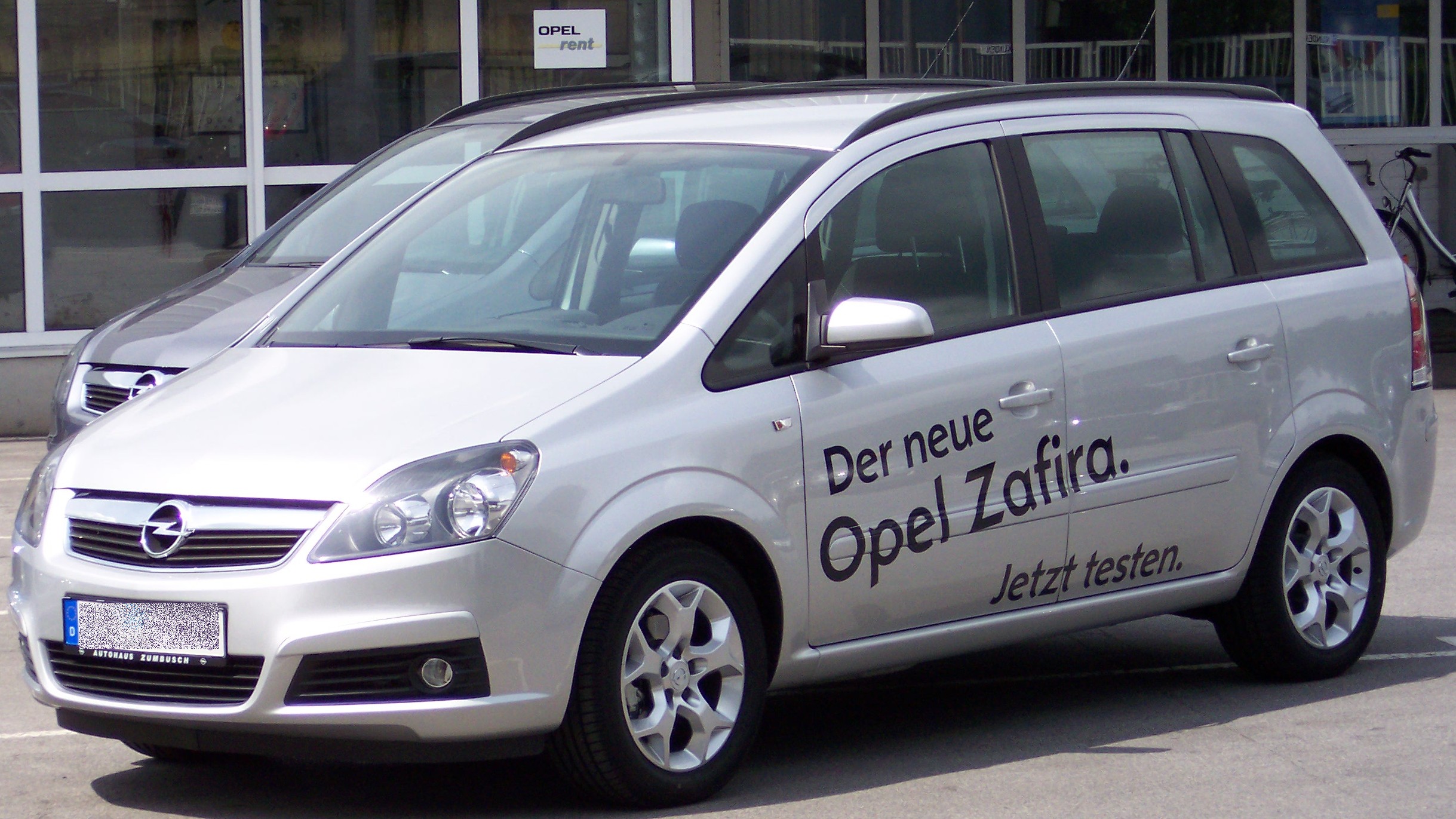
The Opel Zafira is a compact MPV engineered and produced by the German automaker Opel. The Zafira is branded as Vauxhall, and Chevrolet, depending on the market. In Japan, the Zafira was sold as Subaru Traviq. The car first appeared in 1999, and a second generation model was introduced in 2005. The Opel Zafira is produced in Bochum in Germany. The Opel Zafira has seven seats arranged in three rows, the back row of which can be folded into the floor to create more space, individually or together, rather than requiring that the extra seats be physically removed from the vehicle. The system was named Flex 7.The first generation of Zafira is usually referred to as Zafira A, as is customary for Opel models. The car was based on the same platform as the 1998 Astra G/B and shared much in common with that car. The Zafira A body was used in GM's concept hydrogen-powered fuel cell vehicle the HydroGen3. The Opel Zafira A was replaced by Zafira B in Europe and Japan from 2005, but is still sold in most other markets, except for Australia and New Zealand, where the model was cancelled altogether. The Zafira was sold in the Philippines from 2001 to 2005, being the last European-based Opel car to be sold in the Philippines after they stopped selling the Opel Astra in 2003.The Opel Zafira comes with a variety of engines adopted from the Astra. For Europe, there was a CNG-powered version and a 200 hp turbocharged version by the Opel Performance Center. In Brazil, the Zafira is also available with a flexible fuel engine. European versions of the Zafira had these engines:* 1.6 -- 4-cylinder,(ECOTEC) 74 kW (101 bhp) - Fuel economy 9–10 km/litre in the city, and 14–15 km/litre on the highway.
* 1.8 -- 4-cylinder,(ECOTEC) 92 kW (125 bhp) - Fuel economy 6–8.5 km/litre in the city, and 11–12 km/litre on the highway.
* 2.0 Turbo—4-cylinder, 147 kW (200 bhp; OPC/GSI version) - Fuel economy 5.9–8 km/litre in the city, and 9.5–11 km/litre on the highway.
* 2.2 -- 4-cylinder, 108 kW (146 bhp) - Fuel economy 12.2 litre/100 km in the city, and 7.0 litre/100 km on the highway.
* 2.0 -- 4-cylinder turbo diesel, 74 kW (100 bhp) - Fuel economy 11–12.5 km/litre in the city, and 13–15 km/litre on the highway.
* 2.2 -- 4-cylinder turbo diesel, 92 kW (125 bhp) - Fuel economy 11–13.5 km/litre in the city, and 14–15.8 km/litre on the highway.
* 2.2 -- 4-cylinder turbo diesel, 107 kW (147 bhp) - Fuel economy 12–14 km/litre in the city, and 14–15.8 km/litre on the highway.
* 1.6 -- 4-cylinder Twinport, 77 kW (105 bhp) – To be replaced by an improved, 115 bhp (86 kW; 117 PS) version in 2008.
* 1.8 -- 4-cylinder, 103 kW (140 bhp)
* 2.0 Turbo—4-cylinder, 147 kW (200 bhp)
* 2.0 Turbo—4-cylinder, 177 kW (240 bhp; OPC/VXR version)
* 2.2 -- 4-cylinder, 110 kW (155 bhp)
* 1.9 -- 4-cylinder turbo diesel, 74 kW (100 bhp)
* 1.9 -- 4-cylinder turbo diesel, 88 kW (120 bhp)
* 1.9 -- 4-cylinder turbo diesel, 110 kW (150 bhp)
Labels:
Opel
Opel Zafira
The Opel Zafira is a compact MPV engineered and produced by the German automaker Opel. The Zafira is branded as Vauxhall, and Chevrolet, depending on the market. In Japan, the Zafira was sold as Subaru Traviq. The car first appeared in 1999, and a second generation model was introduced in 2005. The Opel Zafira is produced in Bochum in Germany. The Opel Zafira has seven seats arranged in three rows, the back row of which can be folded into the floor to create more space, individually or together, rather than requiring that the extra seats be physically removed from the vehicle. The system was named Flex 7.The first generation of Zafira is usually referred to as Zafira A, as is customary for Opel models. The car was based on the same platform as the 1998 Astra G/B and shared much in common with that car. The Zafira A body was used in GM's concept hydrogen-powered fuel cell vehicle the HydroGen3. The Opel Zafira A was replaced by Zafira B in Europe and Japan from 2005, but is still sold in most other markets, except for Australia and New Zealand, where the model was cancelled altogether. The Zafira was sold in the Philippines from 2001 to 2005, being the last European-based Opel car to be sold in the Philippines after they stopped selling the Opel Astra in 2003.The Opel Zafira comes with a variety of engines adopted from the Astra. For Europe, there was a CNG-powered version and a 200 hp turbocharged version by the Opel Performance Center. In Brazil, the Zafira is also available with a flexible fuel engine. European versions of the Zafira had these engines:* 1.6 -- 4-cylinder,(ECOTEC) 74 kW (101 bhp) - Fuel economy 9–10 km/litre in the city, and 14–15 km/litre on the highway.
* 1.8 -- 4-cylinder,(ECOTEC) 92 kW (125 bhp) - Fuel economy 6–8.5 km/litre in the city, and 11–12 km/litre on the highway.
* 2.0 Turbo—4-cylinder, 147 kW (200 bhp; OPC/GSI version) - Fuel economy 5.9–8 km/litre in the city, and 9.5–11 km/litre on the highway.
* 2.2 -- 4-cylinder, 108 kW (146 bhp) - Fuel economy 12.2 litre/100 km in the city, and 7.0 litre/100 km on the highway.
* 2.0 -- 4-cylinder turbo diesel, 74 kW (100 bhp) - Fuel economy 11–12.5 km/litre in the city, and 13–15 km/litre on the highway.
* 2.2 -- 4-cylinder turbo diesel, 92 kW (125 bhp) - Fuel economy 11–13.5 km/litre in the city, and 14–15.8 km/litre on the highway.
* 2.2 -- 4-cylinder turbo diesel, 107 kW (147 bhp) - Fuel economy 12–14 km/litre in the city, and 14–15.8 km/litre on the highway.
* 1.6 -- 4-cylinder Twinport, 77 kW (105 bhp) – To be replaced by an improved, 115 bhp (86 kW; 117 PS) version in 2008.
* 1.8 -- 4-cylinder, 103 kW (140 bhp)
* 2.0 Turbo—4-cylinder, 147 kW (200 bhp)
* 2.0 Turbo—4-cylinder, 177 kW (240 bhp; OPC/VXR version)
* 2.2 -- 4-cylinder, 110 kW (155 bhp)
* 1.9 -- 4-cylinder turbo diesel, 74 kW (100 bhp)
* 1.9 -- 4-cylinder turbo diesel, 88 kW (120 bhp)
* 1.9 -- 4-cylinder turbo diesel, 110 kW (150 bhp)
Labels:
Opel
Subscribe to:
Comments (Atom)