A sporty designer suit, custom-tailored wheels with diameters of up to 20 inches complete with corresponding suspension options, performance tuning for all engines and exclusive interior design: Brabus now offers an extensive customization program for the new Mercedes SLK.
Sporty-elegant Brabus aerodynamic-enhancement components give the roadster an even more thrilling appearance. The two Brabus front spoiler lips that attach on the left and right side of the production apron and the striking bezels for the daytime running lights lend the SLK a more striking nose. But that's not all: the spoilers also reduce lift on the front axle which particularly benefits directional stability at high speeds.
The Brabus side sill attachments emphasize the sporty lateral lines of the car and seem to make the rear fenders wider visually. The rear of the car receives some added sporty character with the Brabus diffuser and the Brabus rear spoiler on the trunk lid. The diffuser is integrated with utmost precision into the production bumper and features a centrally mounted rear reflector. These aerodynamic-enhancement components also serve more than just a visual function; they reduce lift in the rear as well.
A major contribution to the sporty appearance of the new SLK from Bottrop likewise comes from the Brabus Monoblock wheels, which are available in various one-piece or multi-piece designs with diameters ranging from 17 to 20 inches.
The attached photos show the roadster equipped with Brabus Monoblock F wheels painted the new exclusive 'Liquid Titanium' color. They are mounted in size 8.5Jx20 in front and in size 9.5Jx20 on the rear axle. Brabus recommends high-performance tires from Continental, Pirelli or Yokohams in sizes 235/30 ZR 20 on the front axle and 275/25 ZR 20 in back.
Brabus sport springs were custom-developed to match the conversion to these king-sized tires. They are calibrated to work with the production shocks, and lower the ride height of the two-seater by some 30 millimeters (1.2 inches). Brabus also offers various versions of its high-performance brake systems for the new SLK.
These measures furthermore make the new SLK perfectly suited for some extra power. In a first step Brabus offers efficient and reasonably priced Brabus ECO PowerXtra CGI tuning for the four-cylinder direct-injection engines. The processor-controlled Brabus ECO PowerXtra CGI auxiliary control modules are custom-tailored to each respective engine variant and can be installed by any authorized Mercedes-Benz dealer in less than an hour thanks to their 'plug and play' design. All performance kits are backed by the one-of-a-kind Brabus Tuning Warranty® of three years, up to 100,000 kilometers / 62,000 miles (updated November 2006). Brabus recommends Aral high-performance lubricants.
To retain the engine's longevity and fatigue strength these kits are designed to only activate the performance-enhancing mapping when all parameters such as engine temperature etc. are in the green. This effectively prevents the performance increase from negatively affecting the service life of the engine.
After the installation of the Brabus ECO PowerXtra B20 CGI performance kit the four-cylinder direct-injection engine of the SLK 200 BlueEFFICIENCY produces an extra 26 hp (25 bhp) / 19 kW of power and an additional 30 Nm (22 lb-ft) of peak torque.
The new SLK 250 BlueEFFICIENCY can be upgraded at Brabus in two stages. The Brabus ECO PowerXtra B25 CGI module bumps power output of the four-cylinder direct-injection engine from standard 204 hp (201 bhp) / 150 kW to 230 hp (226 bhp) / 169 kW at just 5,500 rpm.
Another ten additional horsepower can be realized with the supplementary installation of a larger intercooler and an electronically controlled Brabus sport wastegate valve that are part of the Brabus ECO PowerXtra B25S CGI performance kit. 240 hp (236 bhp) / 176 kW of power and 370 Nm (273 lb-ft) of torque in overboost mode accelerate the two-seater in 6.2 seconds from rest to 100 km/h on the way to a top speed of 248 km/h (154 mph).
On the road all CGI engines performance-tuned by Brabus deliver not just excellent driving performance but also optimized pulling power from low engine speeds and favorable fuel economy. Just as important for the Brabus engine specialists were exemplary low emissions: like the corresponding non-tuned engines all engines with Brabus ECO PowerXtra CGI performance kit meet strict Euro V emission limits.
The installation of the Brabus stainless-steel sport exhaust system is advantageous not only for tuned engines. Its four tailpipes featuring the typical Brabus design not only give the roadster an even more exclusive appearance but also produce an even sportier exhaust note for all engine variants.
Another focus of the Brabus refinement of the new Mercedes SLK is the interior. Brabus offers an extensive program for the roadster: it includes attractive accessories such as high-gloss polished stainless-steel scuff plates with Brabus logo and sporty elements such as aluminum foot pedals and shifter.
Requests for even more individuality can be fulfilled by the Brabus upholstery shop in the form of exclusive interiors crafted from especially soft and breathable Brabus Mastik leather and Alcantara.
Showing posts with label Lotus. Show all posts
Monday, August 8, 2011
Nissan Versa Sedan
Compact sedans are all the rage, with a host of new entries from both domestic and import manufacturers reaching showrooms recently. Nissan will cash in on that popularity with the 2012 Versa sedan, debuting today at the New York auto show with refreshed styling and tweaks to improve fuel economy.
The 2012 Versa rides on an evolution of the last car's platform called V, for Versatile. The sedan's wheelbase and width are unchanged from the current model, but it loses about an inch of length and height. Despite this, Nissan says that packaging improvements for the engine and transaxle mean there is more trunk space. The new car also should be marginally lighter than before.
Styling-wise, the new Versa takes cues from the larger Altima and Maxima sedans, starting with a new grille design and oval-shaped headlights, and continued with a smoother rear and reshaped taillights that sweep from the rear bumper to the Versa's rear haunches. The hood and sides are broken up by an assortment of creased character lines akin to those seen on the Hyundai Elantra. Whereas the old Versa had a more conventional flat roof and steep rear window, the new car's roofline gently slopes toward the trunk, following the coupe-like trend. The exterior changes reportedly help achieve a low 0.31 drag coefficient.
Sunday, August 7, 2011
2013 Lexus GS 350
Lexus will announce the concept of the 2013 Lexus GS 350 at Pebble Beach Concours d’Elegance on August 18. Luxury sedan teaser images have revealed a front-end design of all-new model. Image manipulated to bring out the fine grill lines, and intricate details of the design of the bumper and hood.
2013 Lexus GS 350 will feature a brand new design philosophy, with a hint of new styles like the distinctive front grille, which will soon be seen on all future Lexus vehicles. The new GS will also lead the rest of the Lexus lineup in an entirely new direction of the driving dynamics. Possible 2013 Lexus GS 350 will be powered by a 3.5-liter V6 is well known.
“Today, buyers in mid-size luxury segment want a more exciting driving experience, a style that makes statements, and a roomier interior package,” said Mark Templin, Lexus group vice president and general manager.
“With all the new GS, we are giving them what they asked for, and much more.” She finished.
2013 Lexus GS 350 will feature a brand new design philosophy, with a hint of new styles like the distinctive front grille, which will soon be seen on all future Lexus vehicles. The new GS will also lead the rest of the Lexus lineup in an entirely new direction of the driving dynamics. Possible 2013 Lexus GS 350 will be powered by a 3.5-liter V6 is well known.
“Today, buyers in mid-size luxury segment want a more exciting driving experience, a style that makes statements, and a roomier interior package,” said Mark Templin, Lexus group vice president and general manager.
“With all the new GS, we are giving them what they asked for, and much more.” She finished.
Friday, July 29, 2011
Chevrolet Cruze Hatchback
General Motors revealed what it called the Chevrolet Cruze Hatchback show car at the Paris Motor Show last year, which was in all reality, was a thinly disguised version of the production car. GM just announced, however, that we will see the actual production car this March at the 2011 Geneva Motor Show.
Although we won’t see the final car until we arrive in Switzerland, Chevrolet’s made no attempt to hide the fact that the car will look nearly identical to the Cruze Hatchback show car. We have to say, this isn’t a bad thing as the hatchback show car was a good looking vehicle. It featured the same front end as the sedan — save the blue headlights and LED fog lights — along with a nearly identical roofline. Rather than cutting into a trunklid though, the roofline smoothly slopes into a rakish hatch. The show car took the style of its Opel Astra platform-mate one step further, with sharper creases and a more daring C-pillar.
Unlike in Paris where GM gave no indication of what powertrains we would find under the hood of the production car, we’v now learned the basics. GM says it will be launched with a new range of engines, likely meaning the new range of gasoline and diesel I-4s introduced on the Cruze and Europe-only Orlando MPV. This is evidenced by GM’s confirmation that the range-topping turbo-diesel unit will be the same 160-horsepower, 2.0-liter I-4 as in the Orlando coupled to a six-speed manual transmission.
“The new Cruze hatchback cements that Chevrolet’s claim for a place among the mainstream brands in Europe, and it’s a vehicle that will bring new levels of value against some of the more established competition,” said Wayne Brannon, president and managing director of Chevrolet Europe.
While the photos here are of the Cruze Hatchback show car, as GM won’t reveal the production model until Geneva, it should look nearly identical. The only changes we’d expect are the removal of the blue headlight covers, blue brake calipers, and maybe the LED daytime running lights. We’ll know for sure this March when the car is revealed. GM says European sales are scheduled to start this summer, but sadly, we’re unlikely to see this car in the States.
JAZ96FRHE7QA
Although we won’t see the final car until we arrive in Switzerland, Chevrolet’s made no attempt to hide the fact that the car will look nearly identical to the Cruze Hatchback show car. We have to say, this isn’t a bad thing as the hatchback show car was a good looking vehicle. It featured the same front end as the sedan — save the blue headlights and LED fog lights — along with a nearly identical roofline. Rather than cutting into a trunklid though, the roofline smoothly slopes into a rakish hatch. The show car took the style of its Opel Astra platform-mate one step further, with sharper creases and a more daring C-pillar.
Unlike in Paris where GM gave no indication of what powertrains we would find under the hood of the production car, we’v now learned the basics. GM says it will be launched with a new range of engines, likely meaning the new range of gasoline and diesel I-4s introduced on the Cruze and Europe-only Orlando MPV. This is evidenced by GM’s confirmation that the range-topping turbo-diesel unit will be the same 160-horsepower, 2.0-liter I-4 as in the Orlando coupled to a six-speed manual transmission.
“The new Cruze hatchback cements that Chevrolet’s claim for a place among the mainstream brands in Europe, and it’s a vehicle that will bring new levels of value against some of the more established competition,” said Wayne Brannon, president and managing director of Chevrolet Europe.
While the photos here are of the Cruze Hatchback show car, as GM won’t reveal the production model until Geneva, it should look nearly identical. The only changes we’d expect are the removal of the blue headlight covers, blue brake calipers, and maybe the LED daytime running lights. We’ll know for sure this March when the car is revealed. GM says European sales are scheduled to start this summer, but sadly, we’re unlikely to see this car in the States.
JAZ96FRHE7QA
Saturday, July 16, 2011
Lotus Evora S
Executive Officer summed it up beautifully when he said: "You don't realise what you were missing from your driving experience until you get behind the wheel of the Evora S."
So apart from the obvious power difference, how is the Lotus Evora S different to the standard Evora? It's another question we put to the CEO (given that he's spent a little time behind the wheel, we thought he'd be best placed to answer questions). This is what he said: "It's the next level of Evora experience. It communicates with you better, the suspension setting has been fine tuned for added power and control so it responds even more to direction. It's an instinctual car, the experience is pure."
"We were proud of the Evora but we're even prouder of the Lotus Evora S, I feel like it does the true Lotus experience justice. The really great thing is that as we move forward the standard Evora should also benefit from some of these developments."
The Lotus Evora S comes with a sport pack as standard featuring a 'sport' button which allows the driver to control throttle response and activate the exhaust by-pass valve. The sport button also raises the instantaneous rev limit and changes the dynamic stability control settings resulting in a total experience change. There are cross-drilled brakes for improved cooling. And here's a heads up for those who buy into the old adage 'you can tell the men from the boys by the size of their toys': the external emotion of the Lotus Evora S has been improved with a completely new active exhaust which means that at the push of a button the car sounds just as dramatic as it feels.
Commenting on the Lotus Evora S, Lotus Chief Commercial Officer Andreas Prillmann said: "The Evora S is a natural progression for us but more than that, it's a taste of what people can come to expect from the next generation of Lotus cars. It retains core Lotus values such as performance through lightweight but it also gives more than that. It's the perfect combination of top performance, style and comfort. Form doesn't sacrifice function in the case of the Lotus Evora S."
Lotus Evora S Technical Specification
So apart from the obvious power difference, how is the Lotus Evora S different to the standard Evora? It's another question we put to the CEO (given that he's spent a little time behind the wheel, we thought he'd be best placed to answer questions). This is what he said: "It's the next level of Evora experience. It communicates with you better, the suspension setting has been fine tuned for added power and control so it responds even more to direction. It's an instinctual car, the experience is pure."
"We were proud of the Evora but we're even prouder of the Lotus Evora S, I feel like it does the true Lotus experience justice. The really great thing is that as we move forward the standard Evora should also benefit from some of these developments."
The Lotus Evora S comes with a sport pack as standard featuring a 'sport' button which allows the driver to control throttle response and activate the exhaust by-pass valve. The sport button also raises the instantaneous rev limit and changes the dynamic stability control settings resulting in a total experience change. There are cross-drilled brakes for improved cooling. And here's a heads up for those who buy into the old adage 'you can tell the men from the boys by the size of their toys': the external emotion of the Lotus Evora S has been improved with a completely new active exhaust which means that at the push of a button the car sounds just as dramatic as it feels.
Commenting on the Lotus Evora S, Lotus Chief Commercial Officer Andreas Prillmann said: "The Evora S is a natural progression for us but more than that, it's a taste of what people can come to expect from the next generation of Lotus cars. It retains core Lotus values such as performance through lightweight but it also gives more than that. It's the perfect combination of top performance, style and comfort. Form doesn't sacrifice function in the case of the Lotus Evora S."
Lotus Evora S Technical Specification
- Engine: Mid mounted, transverse 3.5 litre DOHC V6 VVT-I
- Transmission: 6 speed manual
- Chassis: Modular lightweight bonded aluminium structure
- Steering: Lotus tuned hydraulically-assisted power steering
- Suspension
- Forged aluminium double wishbone suspension
- Bilstein high performance gas dampers
- Eibach coaxial coil springs
- Fuel consumption (Standard wheel option)
- urban: 14.5 l/100km
- extra urban: 7.4 l/100km
- combined: 10.0l/100km
- CO2 Emissions: 235 g/km
- Fuel consumption (19/20" wheel option)
- urban: 14.6 I/100km
- extra urban: 7.6 I/100km
- combined: 10.2 I/100km
- CO2 Emissions: 239 g/km
- Max power: 350 PS / 257.5 kW @ 7000 rpm
- Max torque: 400 Nm / 295 lb ft @ 4500 rpm
- 0-60 mph: 4.6s
- 0-100 km/h: 4.8s
- Maximum speed: 172mph
- Vehicle mass (unladen): 1437kg
Sunday, July 10, 2011
Lotus Evora Type 124 Race For The Road
For years Lotus has a lot planned but before the next generation of sports cars arrived, rumors say some significant revisions currently planned for the Evora.
Lotus Evora Type 124 Race For The Road
Among the 147 who reported planned upgrades revised interior, new exhaust and transmission sharper. Convertible and hybrid versions of plug-ins are also reportedly being considered, but Lotus is said to have another trick of the upper arm.
Read more »
Labels:
Lotus
Friday, July 8, 2011
Land Rover Freelander 2
The 2011 Land Rover Freelander 2 model range, on sale in the UK from the end of September 2010, benefits from a new 2.2-litre diesel engine available with either 150PS or 190PS outputs, a new look exterior plus interior alterations including new instrument dials and a new Premium Pack option.
Land Rover's new turbo diesel engine is available in the 4WD TD4 150PS model featuring a manual transmission and intelligent Stop/Start technology as standard (an automatic gearbox without Stop/Start is available as a cost option), or the new SD4 model delivering 190PS (available in automatic transmission only).
This new engine is quieter, more efficient and both derivatives have 20Nm more torque than the outgoing engine. This means the 2011 Freelander 2 offers improved engine response and more mid-range strength for towing. CO2 emissions have been significantly reduced to 165g/km and 185g/km respectively with corresponding fuel economy benefits.
However, despite reductions in consumption and emissions, there has been no compromise in performance. The flagship 190PS Land Rover Freelander SD4 accelerates from rest to 60mph in 8.7 seconds with an increased top speed of 118mph. The Land Rover Freelander 150PS TD4 manual and automatic versions match the performance of their predecessors.
As well as being upgraded from EU4 to EU5, both versions have a new variable geometry turbocharger and have been extensively re-calibrated to deliver new levels of power, meet emissions regulations and reduce CO2 emissions. They are fitted with a catalysed diesel particulate filter as standard and are now compatible with 10 per cent biodiesel rather than 5 per cent.
As an addition to the Land Rover Freelander 2 range, Land Rover will also offer customers a 2WD derivative, available in the UK from January 2011. This will be called the Land Rover Freelander 2 eD4 and it will be the most efficient Land Rover ever produced, with fuel consumption of 47.2mpg combined, and CO2 emissions of just 158g/km.
"The new Land Rover Freelander 2 eD4 moves Land Rover into the hugely popular and fiercely contested two wheel-drive SUV market," said Land Rover managing director Phil Popham. "The European market for two-wheel drive SUVs represents 23 percent of the segment and we intend to compete strongly here.
"A 2WD option is just one way in which we are developing our vehicles' efficiency whilst adding to the Land Rover range and expanding our appeal to a broader group of customers. We will continue to make the 'world's finest all-terrain vehicles' for those customers who require 4WD but will also now offer an alternative."
This groundbreaking Land Rover Freelander 2 eD4 is powered by the new 2.2-litre turbo diesel engine, delivering 150PS. It is only available with a six-speed manual transmission featuring Stop/Start technology as standard.
The exterior of the latest Land Rover Freelander 2 gets a new look for 2011. Marked out by a new front bumper assembly incorporating new front fog lap bezels, a new front grille finish, improved headlights and tail lamps, new full width tailgate appliqué and new 18- or 19-inch alloy wheel styles. There are three new colour schemes for 2011 Kosrae Green, Baltic Blue and Fuji White.
Inside the cabin, Land Rover's design team have revised the instrument dials, and there are four new seat styles with the option of a Premium Pack that includes Windsor Leather upholstery, an 8/6 way electric seat, plus premium carpet mats and covered centre stowage.
Land Rover's new turbo diesel engine is available in the 4WD TD4 150PS model featuring a manual transmission and intelligent Stop/Start technology as standard (an automatic gearbox without Stop/Start is available as a cost option), or the new SD4 model delivering 190PS (available in automatic transmission only).
This new engine is quieter, more efficient and both derivatives have 20Nm more torque than the outgoing engine. This means the 2011 Freelander 2 offers improved engine response and more mid-range strength for towing. CO2 emissions have been significantly reduced to 165g/km and 185g/km respectively with corresponding fuel economy benefits.
However, despite reductions in consumption and emissions, there has been no compromise in performance. The flagship 190PS Land Rover Freelander SD4 accelerates from rest to 60mph in 8.7 seconds with an increased top speed of 118mph. The Land Rover Freelander 150PS TD4 manual and automatic versions match the performance of their predecessors.
As well as being upgraded from EU4 to EU5, both versions have a new variable geometry turbocharger and have been extensively re-calibrated to deliver new levels of power, meet emissions regulations and reduce CO2 emissions. They are fitted with a catalysed diesel particulate filter as standard and are now compatible with 10 per cent biodiesel rather than 5 per cent.
As an addition to the Land Rover Freelander 2 range, Land Rover will also offer customers a 2WD derivative, available in the UK from January 2011. This will be called the Land Rover Freelander 2 eD4 and it will be the most efficient Land Rover ever produced, with fuel consumption of 47.2mpg combined, and CO2 emissions of just 158g/km.
"The new Land Rover Freelander 2 eD4 moves Land Rover into the hugely popular and fiercely contested two wheel-drive SUV market," said Land Rover managing director Phil Popham. "The European market for two-wheel drive SUVs represents 23 percent of the segment and we intend to compete strongly here.
"A 2WD option is just one way in which we are developing our vehicles' efficiency whilst adding to the Land Rover range and expanding our appeal to a broader group of customers. We will continue to make the 'world's finest all-terrain vehicles' for those customers who require 4WD but will also now offer an alternative."
This groundbreaking Land Rover Freelander 2 eD4 is powered by the new 2.2-litre turbo diesel engine, delivering 150PS. It is only available with a six-speed manual transmission featuring Stop/Start technology as standard.
The exterior of the latest Land Rover Freelander 2 gets a new look for 2011. Marked out by a new front bumper assembly incorporating new front fog lap bezels, a new front grille finish, improved headlights and tail lamps, new full width tailgate appliqué and new 18- or 19-inch alloy wheel styles. There are three new colour schemes for 2011 Kosrae Green, Baltic Blue and Fuji White.
Inside the cabin, Land Rover's design team have revised the instrument dials, and there are four new seat styles with the option of a Premium Pack that includes Windsor Leather upholstery, an 8/6 way electric seat, plus premium carpet mats and covered centre stowage.
Monday, June 27, 2011
211-2012 Lotus Exige Sporty Stylish Concept
The original Lotus Exige (NA or naturally aspirated Exige) was launched in 2000 and had a 1.8 L Rover K Series engine in VHPD (Very High Performance Derivative) tune. It produced 177 bhp (132 kW; 179 PS) in standard form and 192 bhp (143 kW; 195 PS) in the "track spec" version. The Lotus Exige is a two-door, two-seat sports car made by Lotus Cars. It is essentially a coupé version of the Lotus Elise, a mid-engined roadster in production since 1996.
The Series 2 Lotus Exige was introduced. It features a 1.8 L 16-valve DOHC Toyota/Yamaha engine that produces 190 bhp (142 kW; 193 PS) with the Toyota engine designation of 2ZZ-GE. Compared to the Series 2 Elise, it has a front splitter, fibreglass hardtop roof with roof scoop, rear engine cover, and rear spoiler. The sole purpose of these aerodynamic additions to the base Elise is to create more downforce (almost 100 lb (45 kg) of downforce at 100 mph (160 km/h) in the Exige versus 13 lb (5.9 kg) at 100 mph (160 km/h) in the Elise).
The Lotus Exige S Type 72 comes standard with a Sport Pack that consists of black micro fiber ProBax sports seats with gold stitching and a special build plate commemorating one of the F1 car’s 20 Grand Prix victories. At the exterior, the Lotus Exige S type 72 features black and gold Lotus Type 72 color scheme, unique black and gold light weight wheels and is finished with hand-painted gold Type 72 and Exige S logos.
The new 2011 Lotus Exige gains a composite rear wing, first seen on the Exige GT3 road car concept. This new wing is 7.1 inches wider, is mounted 1.8 inches higher and 2.4 inches further back compared to the previous model year.Not only is the wing's size and location different, but it is also mounted to the body via end plates which increases stiffness and increases airflow over the wing - all told, it maintains an impressive 93 pounds of downforce at 100 mph.
Powering the 2011 Lotus Exige S is a supercharged and air-to-air intercooled version of the same Toyota-sourced 1.8 liter inline-four used in the Elise. As the name suggests, the Exige S240 version produces 240 horsepower at 8,000 rpm along with 170 lb-ft at 5,500 rpm. It features Toyota's variable valve timing and lift system. The only transmission is a six-speed close-ratio manual, sending power to the nearby rear wheels. The Exige S240 weighs in at just under 2,100 lbs, and returns 20 mpg in the EPA's city cycle and 26 mpg on the highway. The Exige S240 sprints from zero-to-60 in just 4.1 seconds, and finishes the race to 100 in just ten seconds.
![]() |
| 211-2012 Lotus Exige |
The Series 2 Lotus Exige was introduced. It features a 1.8 L 16-valve DOHC Toyota/Yamaha engine that produces 190 bhp (142 kW; 193 PS) with the Toyota engine designation of 2ZZ-GE. Compared to the Series 2 Elise, it has a front splitter, fibreglass hardtop roof with roof scoop, rear engine cover, and rear spoiler. The sole purpose of these aerodynamic additions to the base Elise is to create more downforce (almost 100 lb (45 kg) of downforce at 100 mph (160 km/h) in the Exige versus 13 lb (5.9 kg) at 100 mph (160 km/h) in the Elise).
![]() |
| 211-2012 Lotus Exige |
The Lotus Exige S Type 72 comes standard with a Sport Pack that consists of black micro fiber ProBax sports seats with gold stitching and a special build plate commemorating one of the F1 car’s 20 Grand Prix victories. At the exterior, the Lotus Exige S type 72 features black and gold Lotus Type 72 color scheme, unique black and gold light weight wheels and is finished with hand-painted gold Type 72 and Exige S logos.
![]() |
| 211 Lotus Exige |
The new 2011 Lotus Exige gains a composite rear wing, first seen on the Exige GT3 road car concept. This new wing is 7.1 inches wider, is mounted 1.8 inches higher and 2.4 inches further back compared to the previous model year.Not only is the wing's size and location different, but it is also mounted to the body via end plates which increases stiffness and increases airflow over the wing - all told, it maintains an impressive 93 pounds of downforce at 100 mph.
Powering the 2011 Lotus Exige S is a supercharged and air-to-air intercooled version of the same Toyota-sourced 1.8 liter inline-four used in the Elise. As the name suggests, the Exige S240 version produces 240 horsepower at 8,000 rpm along with 170 lb-ft at 5,500 rpm. It features Toyota's variable valve timing and lift system. The only transmission is a six-speed close-ratio manual, sending power to the nearby rear wheels. The Exige S240 weighs in at just under 2,100 lbs, and returns 20 mpg in the EPA's city cycle and 26 mpg on the highway. The Exige S240 sprints from zero-to-60 in just 4.1 seconds, and finishes the race to 100 in just ten seconds.
Labels:
Lotus
2011 Lotus Evora Best Engine Performance
The name 2011 Lotus Evora has long been synonymous with innovation and speed, both on the world’s race tracks and also on public roads. Founded by legendary engineer Colin Chapman in the 1950s, the marque enjoyed great track success in the 1960s and 1970s when drivers such as Jim Clark, Graham Hill, Jochen Rindt, Emerson Fittipaldi and Mario Andretti all took the Formula OneWorld Championship behind the wheel of a Lotus.
Lotus is still at the forefront of car design and performance and helping it remain there is NGK Spark Plugs which is aiding the vehicle manufacturer to achieve leadership on the road by supplying spark plugs for the head-turning new 2011 Lotus Evora S supercar. NGK is an original equipment supplier to the vehicle manufacturer with its unique ILFR7B-8 Iridium platinum tipped long-reach spark plugs. 2011 Lotus Evora S is powered by a 3.5-litre DOHC V6 VVT-I supercharged Toyota engine which delivers 345bhp at 7000rpm (350PS). It has a breath-taking 0-60mph figure of just 4.6 seconds and a top speed of 172mph.
Winning the contract for the lightweight £60,000-plus car, which has an aluminium chassis, represents a major achievement for NGK, which has a long track record of supplying OE parts to the world’s leading vehicle manufacturers. Brian Childs, NGK Spark Plugs (UK) Ltd’s Deputy Managing Director, said: “The fact that we were chosen to supply these unique spark plugs by Lotus for the supercharged Toyota engine above other spark plug manufacturers represents a major success for ourselves.
“In 1976, we had our first OE contract for the Lotus Esprit and so this contract continues this long relationship between the two companies. Lotus is respected for its engineering skills and this is another example of the OE successes we have enjoyed over the years with the world’s leading vehicle manufacturers.”
Lotus started with an all-new extruded aluminum chassis for the Evora that is bonded, rather than welded or bolted together. The result (like the Elise/Exige) is an exceptionally light and rigid chassis. But according to Lotus, the 2011 Lotus Evora structure is 60 percent more rigid than the Elise. This improved chassis stiffness allowed engineers to bolt on a more compliant suspension without compromising cornering prowess. The seat-of-the-pants feel of the Elise has been dialed back considerably, but the vehicle still communicates better than almost any non-Lotus sports car.
Mounted just behind the rear bulkhead is a transversely mounted 3.5-liter V6 engine that is based on the Toyota Camry power plant. In order to squeeze this engine into such a small space, Lotus engineers rotated the V6 almost 30 degrees rearward. With some components developed by Lotus (ECU, intake, exhaust), output is increased slightly to 276 horsepower and 258 pound-feet of torque. A six-speed manual is currently the only transmission available, but a paddle-shift automatic is expected by the next model year. Lotus claims a 4.9-second 0-60-mph time, a top speed of 162 mph and a skid-pad number approaching 1.0g. We were unable to run this Evora through our usual instrumented test regimen, but we're inclined to believe the company's numbers from our seat-of-the-pants impressions. Fuel economy is also impressive, estimated at more than 30 mpg on the highway a figure unheard of for an exotic car with such performance.
Daytime Running Lights Dual front seat adjustment -inc: recline, Magnesium flat-bottomed leatherwrapped
steering wheel, Instrumentation -inc: high definition LCD message panel, Illuminated knobs & switches
w/aluminum trim, Remote release glovebox, Integrated cup holders, Door storage bins, 12V pwr outlets -inc: interior, Leather-trimmed shift knob & handbrake sleeve, 18" front wheels, 19" rear wheels, P225/40ZR18 front performance tires, P225/35ZR19 rear performance tires, Side scoops, Sculpted roof, Front air dam, Aerodynamic rear diffuser, Aerodynamic rear spoiler, Bi-xenon headlights w/headlight washing system, LED taillights, Solar glass windows, Intermittent windshield wiper, Lotus Evora chrome ornamentation, Chrome-colored door handles, Bosch electronic differential lock, Forged aluminum double wishbone suspension w/integral joint, Front & rear stabilizer bars, Front & rear Eibach coaxial coil springs, Hydraulic-assist pwr steering, 4-wheel vented disc brakes, AP racing 4-piston calipers, Dual polished exhaust, Side impact safety structure, Front outboard 3-point seat belts, Front & rear seat belt harness anti-roll bars.
Rear central high-mount stop light12V pwr outlets -inc: interior trunk-mounted, Door storage bins, Illuminated knobs & switches w/aluminum trim,Integrated cup holders, Leather-trimmed shift knob & handbrake sleeve, Magnesium flat-bottomed leather-wrapped steering wheel, Remote release glovebox,18" front wheels,19" rear wheels, Aerodynamic rear diffuser, Aerodynamic rear spoiler, Bi-xenon headlights w/headlight washing system, Chrome-colored door handles,Front air dam,Intermittent windshield wiper,LED taillights, Lotus Evora chrome ornamentation, P225/35ZR19 rear performance tires, P225/40ZR18 front performance tires, Sculpted roof,Side scoops, Solar glass windows, Front & rear seat belt harness anti-roll bars, Front outboard 3-point seat belts, Rear central high-mount stop light, Side impact safety structure.
![]() |
| 2011 Lotus Evora |
Lotus is still at the forefront of car design and performance and helping it remain there is NGK Spark Plugs which is aiding the vehicle manufacturer to achieve leadership on the road by supplying spark plugs for the head-turning new 2011 Lotus Evora S supercar. NGK is an original equipment supplier to the vehicle manufacturer with its unique ILFR7B-8 Iridium platinum tipped long-reach spark plugs. 2011 Lotus Evora S is powered by a 3.5-litre DOHC V6 VVT-I supercharged Toyota engine which delivers 345bhp at 7000rpm (350PS). It has a breath-taking 0-60mph figure of just 4.6 seconds and a top speed of 172mph.
![]() |
| 2011 Lotus Evora |
Winning the contract for the lightweight £60,000-plus car, which has an aluminium chassis, represents a major achievement for NGK, which has a long track record of supplying OE parts to the world’s leading vehicle manufacturers. Brian Childs, NGK Spark Plugs (UK) Ltd’s Deputy Managing Director, said: “The fact that we were chosen to supply these unique spark plugs by Lotus for the supercharged Toyota engine above other spark plug manufacturers represents a major success for ourselves.
“In 1976, we had our first OE contract for the Lotus Esprit and so this contract continues this long relationship between the two companies. Lotus is respected for its engineering skills and this is another example of the OE successes we have enjoyed over the years with the world’s leading vehicle manufacturers.”
![]() |
| 2011 Lotus Evora |
Lotus started with an all-new extruded aluminum chassis for the Evora that is bonded, rather than welded or bolted together. The result (like the Elise/Exige) is an exceptionally light and rigid chassis. But according to Lotus, the 2011 Lotus Evora structure is 60 percent more rigid than the Elise. This improved chassis stiffness allowed engineers to bolt on a more compliant suspension without compromising cornering prowess. The seat-of-the-pants feel of the Elise has been dialed back considerably, but the vehicle still communicates better than almost any non-Lotus sports car.
| 2011 Lotus Evora Hybrid |
Mounted just behind the rear bulkhead is a transversely mounted 3.5-liter V6 engine that is based on the Toyota Camry power plant. In order to squeeze this engine into such a small space, Lotus engineers rotated the V6 almost 30 degrees rearward. With some components developed by Lotus (ECU, intake, exhaust), output is increased slightly to 276 horsepower and 258 pound-feet of torque. A six-speed manual is currently the only transmission available, but a paddle-shift automatic is expected by the next model year. Lotus claims a 4.9-second 0-60-mph time, a top speed of 162 mph and a skid-pad number approaching 1.0g. We were unable to run this Evora through our usual instrumented test regimen, but we're inclined to believe the company's numbers from our seat-of-the-pants impressions. Fuel economy is also impressive, estimated at more than 30 mpg on the highway a figure unheard of for an exotic car with such performance.
Daytime Running Lights Dual front seat adjustment -inc: recline, Magnesium flat-bottomed leatherwrapped
steering wheel, Instrumentation -inc: high definition LCD message panel, Illuminated knobs & switches
w/aluminum trim, Remote release glovebox, Integrated cup holders, Door storage bins, 12V pwr outlets -inc: interior, Leather-trimmed shift knob & handbrake sleeve, 18" front wheels, 19" rear wheels, P225/40ZR18 front performance tires, P225/35ZR19 rear performance tires, Side scoops, Sculpted roof, Front air dam, Aerodynamic rear diffuser, Aerodynamic rear spoiler, Bi-xenon headlights w/headlight washing system, LED taillights, Solar glass windows, Intermittent windshield wiper, Lotus Evora chrome ornamentation, Chrome-colored door handles, Bosch electronic differential lock, Forged aluminum double wishbone suspension w/integral joint, Front & rear stabilizer bars, Front & rear Eibach coaxial coil springs, Hydraulic-assist pwr steering, 4-wheel vented disc brakes, AP racing 4-piston calipers, Dual polished exhaust, Side impact safety structure, Front outboard 3-point seat belts, Front & rear seat belt harness anti-roll bars.
Rear central high-mount stop light12V pwr outlets -inc: interior trunk-mounted, Door storage bins, Illuminated knobs & switches w/aluminum trim,Integrated cup holders, Leather-trimmed shift knob & handbrake sleeve, Magnesium flat-bottomed leather-wrapped steering wheel, Remote release glovebox,18" front wheels,19" rear wheels, Aerodynamic rear diffuser, Aerodynamic rear spoiler, Bi-xenon headlights w/headlight washing system, Chrome-colored door handles,Front air dam,Intermittent windshield wiper,LED taillights, Lotus Evora chrome ornamentation, P225/35ZR19 rear performance tires, P225/40ZR18 front performance tires, Sculpted roof,Side scoops, Solar glass windows, Front & rear seat belt harness anti-roll bars, Front outboard 3-point seat belts, Rear central high-mount stop light, Side impact safety structure.
Labels:
Lotus
Friday, June 24, 2011
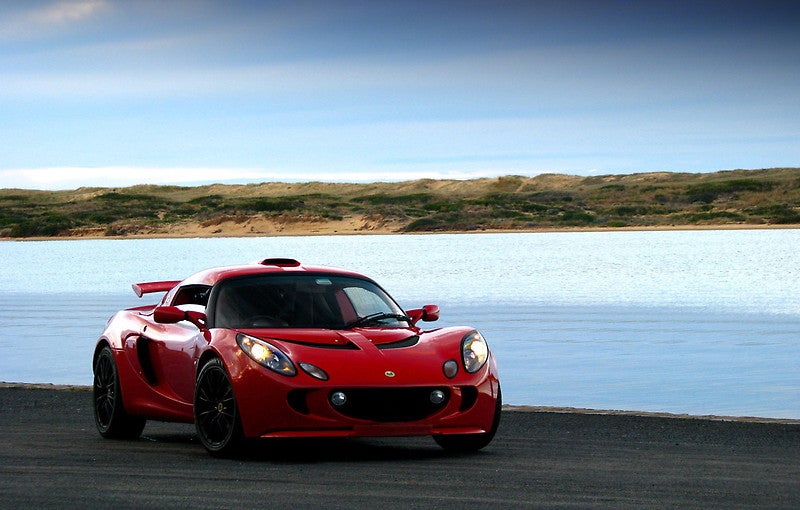
2011 Lotus Elise Luxury Concept Sports Car
Major changes and improvements to the entire model range 2011 Lotus Elise: New design developments
incorporating new clamshell body front, rear bumper and hood, new all in one integrated headlights including
daylight lamps LED and LED direction indicators, improved aerodynamics with a Cd reduction by 4%, resulting in better fuel economy, new cast and forged wheels and the security of vehicles increased from 2 to 3 years and 36,000 miles.
Other changes for 2011 Lotus Elise model year entry level Lotus Elise: New high-tech 1ZR FAE 1.6 liter engine with Valvematic and Dual VVT-I technology to optimize performance and engine efficiency, less than 155 g CO2 per kilometer (improved over 13% compared to the 2010 Elise S) *, combined fuel consumption of 6.14 liters per 100 km (46 mpg) *, New gearbox six-speed close-ratio speed control is available as part of tour package Making its debut at the 80 th International Motor Show Geneva, the model of 2011 Lotus Elise introduced a number of changes and improvements to maintain its leading position in its class.
For the 2011 model year, the Elise range consist of the following options:
* Lotus Elise - 136 hp, less than 155 g CO2 / km - The new 1.6-liter
* Lotus Elise R - 192 PS, 196 g CO2 / km - 1.8 liter
* Lotus Elise SC - 220 PS, 199 g CO2 / km - 1.8-liter supercharged engine
We opened the class Lotus 1.6 Elise in the Hungarian Touringcar Championship. This class will be running together with the touringcars of 2.0 cc and less and will provide separate trophies. We can create a separate race from 15 drivers. This class can be a good opportunity for young drivers because until 1.6 cc the drivers can be entraits when they are 12 years old. The cars of Lotus Ladies Cup can also be used in this class.
Less than 24 hours after the announcement of his commitment to 2011 Lotus Elise as a brand ambassador for the Type 125 programme, former F1 driver Jean Alesi visited the Lotus Headquarters in Hethel, Norfolk and put one of the road cars through its paces. During his visit Alesi also took time out to look over the facilities including the production lines before heading out on the test track with one of the current range. Commenting on his visit Jean Alesi said: “I’m really impressed with the set up here, it’s fantastic, so much care and attention to detail goes into the production. Every element from design through to engineering is spectacular. Driving the Evora was a lot of fun too. Perhaps people make the mistake of underestimating the Evora, it handles really well, great power, overall performance and most of all fun - everything I would expect from a Lotus.
I really enjoyed driving it.” He didn’t just keep the experience to himself though, in the days leading up to his visit, on-site Lotus employees were given the opportunity to enter a competition to win a passenger lap with the F1 legend – as a result, five lucky Lotus staff members had the exclusive chance to ride shotgun with Alesi. Not quite your average Friday at work some might argue.
incorporating new clamshell body front, rear bumper and hood, new all in one integrated headlights including
daylight lamps LED and LED direction indicators, improved aerodynamics with a Cd reduction by 4%, resulting in better fuel economy, new cast and forged wheels and the security of vehicles increased from 2 to 3 years and 36,000 miles.
![]() |
| 2011 Lotus Elise |
Other changes for 2011 Lotus Elise model year entry level Lotus Elise: New high-tech 1ZR FAE 1.6 liter engine with Valvematic and Dual VVT-I technology to optimize performance and engine efficiency, less than 155 g CO2 per kilometer (improved over 13% compared to the 2010 Elise S) *, combined fuel consumption of 6.14 liters per 100 km (46 mpg) *, New gearbox six-speed close-ratio speed control is available as part of tour package Making its debut at the 80 th International Motor Show Geneva, the model of 2011 Lotus Elise introduced a number of changes and improvements to maintain its leading position in its class.
![]() |
| 2012 Lotus Elise |
For the 2011 model year, the Elise range consist of the following options:
* Lotus Elise - 136 hp, less than 155 g CO2 / km - The new 1.6-liter
* Lotus Elise R - 192 PS, 196 g CO2 / km - 1.8 liter
* Lotus Elise SC - 220 PS, 199 g CO2 / km - 1.8-liter supercharged engine
We opened the class Lotus 1.6 Elise in the Hungarian Touringcar Championship. This class will be running together with the touringcars of 2.0 cc and less and will provide separate trophies. We can create a separate race from 15 drivers. This class can be a good opportunity for young drivers because until 1.6 cc the drivers can be entraits when they are 12 years old. The cars of Lotus Ladies Cup can also be used in this class.
![]() |
| 2011 Lotus Elise |
Less than 24 hours after the announcement of his commitment to 2011 Lotus Elise as a brand ambassador for the Type 125 programme, former F1 driver Jean Alesi visited the Lotus Headquarters in Hethel, Norfolk and put one of the road cars through its paces. During his visit Alesi also took time out to look over the facilities including the production lines before heading out on the test track with one of the current range. Commenting on his visit Jean Alesi said: “I’m really impressed with the set up here, it’s fantastic, so much care and attention to detail goes into the production. Every element from design through to engineering is spectacular. Driving the Evora was a lot of fun too. Perhaps people make the mistake of underestimating the Evora, it handles really well, great power, overall performance and most of all fun - everything I would expect from a Lotus.
![]() |
| 2011 Lotus Elise |
I really enjoyed driving it.” He didn’t just keep the experience to himself though, in the days leading up to his visit, on-site Lotus employees were given the opportunity to enter a competition to win a passenger lap with the F1 legend – as a result, five lucky Lotus staff members had the exclusive chance to ride shotgun with Alesi. Not quite your average Friday at work some might argue.
Labels:
Lotus
Monday, May 16, 2011
2011 Lotus Exige
The original Exige (NA or naturally aspirated Exige) was launched in 2000 and had a 1.8 L Rover K Series engine in VHPD (Very High Performance Derivative) tune. It produced 177 bhp (132 kW; 179 PS) in standard form and 192 bhp (143 kW; 195 PS) in the "track spec" version.
Labels:
Lotus
2011 Lotus Exige
The original Exige (NA or naturally aspirated Exige) was launched in 2000 and had a 1.8 L Rover K Series engine in VHPD (Very High Performance Derivative) tune. It produced 177 bhp (132 kW; 179 PS) in standard form and 192 bhp (143 kW; 195 PS) in the "track spec" version.
Labels:
Lotus
Saturday, May 14, 2011
Lotus plans new Elise and Espirit
British sports car maker Lotus actually makes more money consulting other companies and refining their models than selling their own cars! but good news is coming out of factory that we are going to see at least two new models, apart from Evora coupe and convertible, in the next few years. There will be a new version of the lovely Elise in 2011 and also the mighty Espirit will be revived for 2012.
According to the insiders, the new Elise will be a development of the current car
rather than a totally new model based on the Evora. And that’s good because Elise is known for its agile character and to mix it up with the heavier slower Evora can ruin its reputation. The new Espirit project however, that is still in a cloud of skepticism, because of the financial difficulties and fears that the market won’t embrace a mid-engine British sporty firm enough for Lotus to make some money out of it!Friday, April 15, 2011
Lotus Evora
Labels:
Lotus
Lotus Evora
Labels:
Lotus
Subscribe to:
Posts (Atom)